Currently Empty: EGP0.00
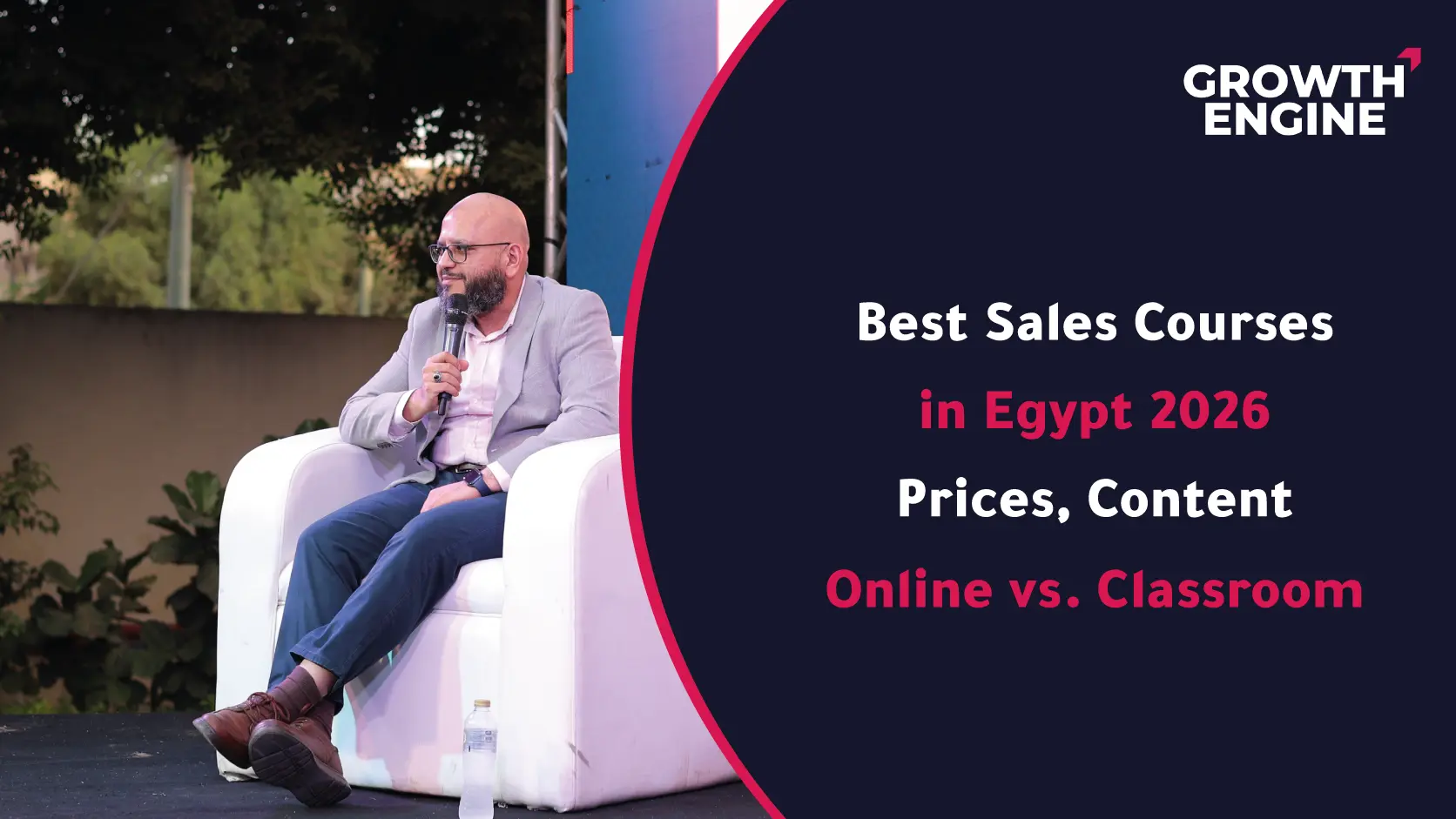
Sales has become one of the most important professional skills for individuals who want to build a stronger career in 2026. Customers are more informed, buying journeys are more complex, and sales professionals are expected to do much more than simply present a product and ask for the order.
Modern sales requires the ability to understand customer needs, ask the right questions, build trust, communicate value, handle objections, negotiate effectively, close opportunities, and maintain a healthy sales pipeline.
This is why professionals searching for sales courses in Egypt are increasingly looking for practical programs that can help them improve the way they actually sell—not simply give them theoretical information.
However, choosing the right sales course is not always straightforward.
The right program for a beginner may be completely different from the right program for an experienced Sales Representative. A professional working in B2B sales may need advanced qualification and negotiation skills, while a Sales Manager may be more focused on pipeline management, forecasting, KPIs, and team development.
Price is another important consideration, but it should not be the only one.
When comparing sales courses in Egypt in 2026, you need to consider the content, practical application, training format, level of interaction, specialization, and how closely the program matches your professional goals.
In this guide, we will explain what to look for in a modern sales course, how to evaluate pricing based on value, the differences between online and classroom training, the skills you should expect to develop, and how to get more value from sales training.
With Growth Engine, the objective is not simply to complete a course. The goal is to turn sales knowledge into practical skills that can be used in conversations, negotiations, follow-ups, pipeline management, and closing.
Why Do You Need Sales Courses in 2026?
Modern sales is more than convincing someone to buy.
Customers often want to understand the value of a solution before making a decision. They may have questions, concerns, alternatives, or internal approval processes that the salesperson needs to understand.
This makes structured sales skills increasingly important.
Modern sales requires multiple skills
A strong sales course should help develop areas such as:
- Effective communication.
- Customer discovery.
- Questioning.
- Active listening.
- Trust building.
- Value communication.
- Objection handling.
- Negotiation.
- Closing.
- Follow-up.
- Lead management.
- Sales pipeline management.
- Performance improvement.
These skills are connected throughout the sales process.
How to Choose the Right Sales Course in Egypt
Instead of searching only for a course described as “the best,” start by defining what you actually need.
Define Your Training Goal
Are you looking for a sales course because you want to:
- Enter sales for the first time?
- Become a Sales Representative?
- Improve your current sales performance?
- Close more opportunities?
- Handle objections more effectively?
- Improve negotiation skills?
- Move into B2B sales?
- Prepare for a sales management role?
Your answer should influence your choice.
Do Not Choose Based on Price Alone
Price matters, but it does not tell you everything about a program.
When comparing sales course prices in 2026, consider:
- Content depth.
- Course structure.
- Practical exercises.
- Training format.
- Instructor involvement.
- Interaction.
- Practical applicability.
- Relevance to your career objective.
This gives you a more useful comparison than simply choosing the cheapest option.
What Should You Learn in a Professional Sales Course?
A strong sales course should give you tools that can be applied throughout the customer journey.
Customer Discovery
One of the most common sales mistakes is presenting the product before understanding the customer.
A professional salesperson should know how to discover:
- The customer’s current situation.
- Their problem.
- The impact of that problem.
- Their desired outcome.
- Their motivation.
- Their obstacles.
- The people involved in the decision.
The better you understand the customer, the easier it becomes to connect your solution to their needs.
Building Value
Knowing product features is not enough.
You need to connect those features to outcomes the customer actually cares about.
Instead of simply listing features, the salesperson should be able to answer the customer’s fundamental question:
“What value will I get from this?”
This is one of the key differences between product-focused selling and value-based selling.
Handling Sales Objections
Objections are a normal part of selling.
A customer may say:
- The price is too high.
- I need to think about it.
- I want to compare alternatives.
- I need to speak with someone else.
- The timing is not right.
- I do not need this right now.
The important issue is not whether objections exist. It is how the salesperson responds.
A Practical Objection-Handling Framework
You can approach objections through several steps:
1. Listen:
Let the customer explain the concern.
2. Clarify:
Ask questions to understand what is actually behind the objection.
3. Diagnose:
Determine whether the concern is about price, value, timing, trust, or decision-making.
4. Respond:
Address the real concern rather than using a memorized response.
5. Confirm:
Make sure the obstacle has actually been addressed.
These are essential skills for a practical sales course.
Closing in Sales Is More Than a Phrase
Some people think closing begins when the salesperson asks for the order.
In reality, effective closing starts much earlier.
If the customer was not properly qualified, their needs were not understood, or the value was not established, the closing stage becomes more difficult.
A good sales process therefore prepares the customer for the next step throughout the conversation.
What Supports Better Closing?
- Understanding customer needs.
- Identifying buying motivation.
- Understanding decision-makers.
- Addressing objections.
- Communicating value.
- Agreeing on next steps.
- Following up appropriately.
Closing should be the natural result of a well-managed sales process rather than a last-minute attempt to pressure the customer.
Sales Course Prices: How Do You Know If the Price Is Right?
There is no single price that defines the value of a sales course.
Pricing can vary depending on the program, content, training format, practical work, specialization, and level of instructor involvement.
Instead of asking only:
“How much does this course cost?”
Ask:
“What am I getting in return for this investment?”
Compare Price With Value
If a program focuses on one specific skill, its value may depend on how important that skill is to your current role.
A broader program covering the sales cycle may offer value through developing several connected capabilities.
For businesses, training value can also be considered through areas such as:
- Lead quality.
- Conversion rates.
- Closing performance.
- Follow-up.
- Pipeline management.
- Sales productivity.
Online or Classroom Sales Courses?
Choosing the right delivery format is another important decision.
There is no format that works perfectly for everyone.
Benefits of Online Sales Courses
Online learning can be useful if you need:
- Flexible scheduling.
- Remote access.
- Convenience.
- A way to balance work and training.
- Learning from different locations.
- Access to training content based on your schedule.
However, there is an important distinction between self-paced online learning and live online training.
A recorded course gives you flexibility, while live online training can provide direct interaction with an instructor.
Benefits of Classroom Training
Classroom training can be useful for learners who prefer direct interaction.
Potential advantages include:
- Live discussion.
- Instructor interaction.
- Group exercises.
- Role plays.
- Immediate feedback.
- Simulated sales situations.
These elements can be particularly useful because sales skills often require practice rather than observation alone.
Is Online Training Suitable for Beginners?
Yes, provided the program is structured properly.
Beginners need a clear learning path that starts with fundamentals and gradually introduces real-world sales situations.
A useful program should ideally include:
- Concept explanation.
- Practical examples.
- Exercises.
- Sales scenarios.
- Feedback or review.
- Clear implementation steps.
If an online program relies entirely on passive viewing, the learner may need to put in additional effort to turn knowledge into behavior.
Developing Modern Selling Skills With Growth Engine
If your goal is to strengthen your approach to modern selling, Modern Selling Mastery Training can be explored as a relevant Growth Engine training path.
The goal should not be to memorize sales phrases.
Instead, focus on understanding how to manage the sales process more professionally.
After training, apply the skills to real situations such as:
- Sales calls.
- Customer meetings.
- Objection handling.
- Presentations.
- Follow-ups.
- Closing conversations.
The Role of Sales Psychology
Selling is not based on logic alone.
Customer behavior, concerns, motivations, trust, and the way information is presented can all influence the sales conversation.
Understanding sales psychology can help sales professionals recognize why customers react differently to similar offers.
What Should You Understand?
- Why customers hesitate.
- What builds trust.
- How questions influence conversations.
- Why customers respond differently.
- How value can be communicated according to customer motivations.
If you want to explore this area further, Sales Mastery for the Unconscious Mind provides a Growth Engine learning path focused on another dimension of sales behavior and customer decision-making.
The Role of Sales Pipeline Management
A salesperson can have excellent communication skills and still struggle with performance if opportunities are not managed properly.
A sales pipeline helps you understand where each opportunity currently sits.
A typical process can move through:
Lead → Qualification → Discovery → Proposal → Negotiation → Closing
Why Should You Learn Pipeline Management?
It helps you:
- Understand your current opportunities.
- Prioritize prospects.
- Identify stalled deals.
- Organize follow-ups.
- Plan expected results.
- Manage your time.
- Focus on higher-value opportunities.
That is why modern sales courses in Egypt in 2026 should go beyond communication and persuasion and help learners understand the sales process as a system.
Sales Courses for Beginners
If you are starting your career, you do not necessarily need to learn every advanced sales concept immediately.
Start with the fundamentals.
Skills to Prioritize
- Sales fundamentals.
- Communication.
- Listening.
- Customer discovery.
- Qualification.
- Value presentation.
- Objection handling.
- Closing.
- Follow-up.
Once you have developed these foundations, you can move into more specialized areas such as B2B sales, negotiation, account management, or sales leadership.
Sales Courses for Experienced Professionals
Experienced salespeople often have different needs.
Rather than repeating the basics, identify the area that is limiting your performance.
Are deals being lost during negotiation?
Are objections stopping opportunities from moving forward?
Do you have plenty of leads but a weak closing rate?
Is pipeline management becoming difficult?
Identifying the problem first makes it easier to select relevant training.
How to Measure the Results of Sales Training
Do not wait until the end of a course to decide whether it was useful.
Choose measurable indicators before you start.
Depending on your role, these may include:
- Qualified opportunities.
- Conversion rate.
- Number of meetings.
- Closing rate.
- Sales-cycle length.
- Follow-up activity.
- Deal value.
- Pipeline quality.
You do not need to improve everything at once.
Choose the metrics most closely connected to the skill you are developing.
Common Mistakes When Choosing Sales Courses
Choosing Based Only on Price
The cheapest course is not automatically the right course, and a higher price does not automatically make a program suitable for your goals.
Choosing Without Knowing Your Level
Beginners, experienced salespeople, and sales managers have different development needs.
Focusing More on Certification Than Skills
A certificate can add value to your professional profile, but practical ability remains essential.
Ignoring Practice
Sales is a practical skill, so development requires application.
Starting Without a Clear Goal
Before enrolling, define the skill you want to improve and the outcome you want to achieve.
How to Get More Value From a Sales Course
Enrollment is only the beginning.
After each lesson, apply what you learned as soon as possible.
Use a 30-Day Implementation Approach
Week 1:
Identify the key skills you want to apply.
Week 2:
Use them in sales calls and customer meetings.
Week 3:
Review your performance and identify mistakes.
Week 4:
Determine which skills require additional practice.
This approach helps turn training from information into actual sales behavior.
Conclusion
Choosing the best sales courses in Egypt for 2026 should not be based on price or course title alone.
Start by identifying your objective, then evaluate the content, training method, practical application, specialization, and relevance to your current career stage.
If you are a beginner, focus on sales fundamentals, communication, discovery, objection handling, and closing. If you are already experienced, look for training that addresses the specific areas limiting your performance, such as negotiation, pipeline management, closing, or sales psychology.
When deciding between online and classroom training, consider your schedule, learning style, and preferred level of interaction.
With Growth Engine, sales training can become a practical step toward developing stronger selling skills, improving your sales process, and building a more structured approach to customers and opportunities.
Frequently Asked Questions
What are the best sales courses in Egypt in 2026?
The right sales course depends on your professional level, objectives, and the skills you want to develop. Focus on practical content and relevance rather than choosing based only on price or course name.
How much does a sales course cost?
Sales course pricing varies according to the program, content, delivery format, and level of training. The better approach is to compare the value of the program with the outcome you want to achieve.
Are online sales courses better than classroom courses?
Each format has different advantages. Online training provides flexibility, while classroom training can offer more direct interaction and practical exercises.
Do I need previous experience before taking a sales course?
No. Many sales-learning paths can be suitable for beginners, provided the content starts with the appropriate fundamentals.
What do you learn in a sales course?
A sales course may cover customer discovery, qualification, value communication, objection handling, negotiation, closing, follow-up, and sales pipeline management.
Are sales courses useful for B2B sales?
Yes, but professionals working in B2B should look for training that addresses decision-makers, discovery, qualification, negotiation, and opportunity management.
Is a sales-course certificate important?
A certificate can add value to a professional profile, but practical sales skills are also essential. The ability to apply what you learned is an important part of training value.
How can I tell whether a sales course is worth the price?
Compare the price with the content, practical application, training format, specialization, and relevance to your goals. The closer the program is to your actual development needs, the more meaningful the comparison becomes.
Can a sales course improve closing skills?
Training can help develop skills connected to closing, including discovery, objection handling, negotiation, value communication, and defining the next step.
How do I choose the right sales course for my career?
Start by identifying whether you are a beginner, Sales Representative, experienced professional, or sales manager. Then select a program that focuses on the skills required for your current career stage.