Currently Empty: EGP0.00
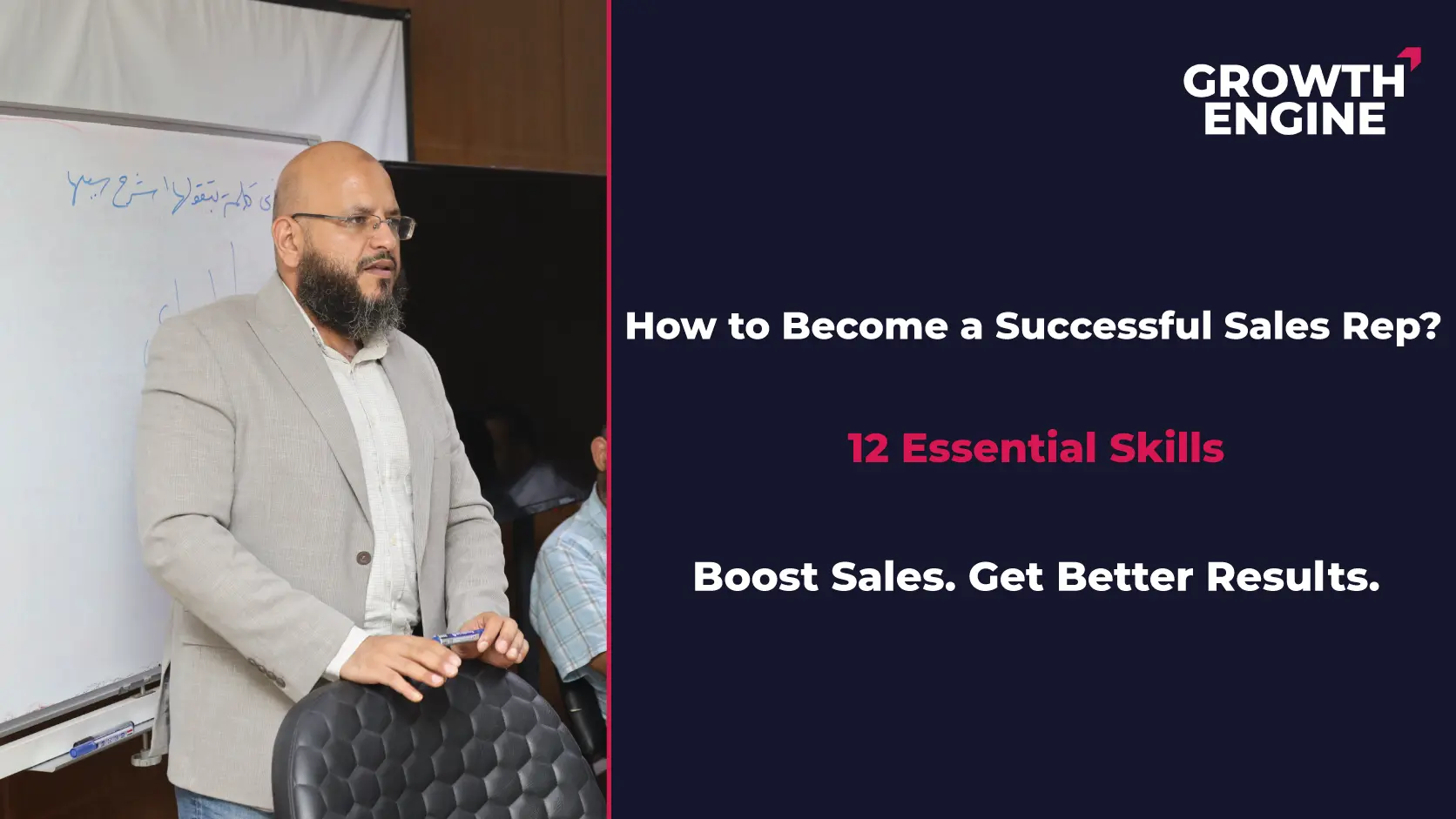
Why do some sales representatives consistently achieve their targets while others struggle to convert prospects into paying customers?
Both may have access to the same products, pricing, and potential customers. Both may spend hours making calls, sending proposals, and attending meetings. Yet their results can be completely different.
The difference often comes down to their ability to understand customer needs, communicate value, handle objections, and guide conversations toward meaningful buying decisions.
Modern selling is no longer about memorizing product features or delivering persuasive presentations. Customers have access to more information than ever before, compare multiple providers, and expect sales professionals to understand their challenges before recommending a solution.
This means that successful selling requires a combination of communication, emotional intelligence, negotiation, problem-solving, and analytical thinking.
Developing the right sales representative skills is therefore essential for anyone who wants to build a successful career in sales, whether they work in B2B sales, retail, business development, account management, or inside sales.
However, knowing that these skills matter is not enough. Sales professionals must understand how to apply them during real customer interactions, recognize where their sales process needs improvement, and continuously develop their approach.
In this guide, we explore 12 essential skills every successful sales representative should develop. Each skill includes practical techniques, examples, and actionable recommendations that can help improve customer relationships and increase closing rates.
At Growth Engine, we believe that sales performance improves when professionals combine structured selling methods with practical training and a deeper understanding of customer behavior.
Let’s explore the skills that make the difference between an average salesperson and a high-performing sales professional.
What Are the Most Important Sales Representative Skills?
Sales representative skills are the abilities and professional behaviors that help individuals identify potential customers, understand their needs, present suitable solutions, and successfully close deals.
These abilities extend beyond communication and persuasion. A successful salesperson must also manage their pipeline, organize daily activities, understand the market, and evaluate performance.
For practical purposes, these skills can be divided into three categories:
- Interpersonal skills: Communication, active listening, emotional intelligence, and relationship building.
- Selling skills: Persuasion, negotiation, objection handling, and closing techniques.
- Organizational and analytical skills: Time management, product knowledge, pipeline management, and performance analysis.
The strongest sales professionals develop all three categories rather than relying on one particular strength.
12 Essential Skills Every Successful Sales Representative Needs
1. Effective Communication Skills
Communication is one of the most important foundations of successful selling. A salesperson may have an excellent product, but if they cannot explain its value clearly, customers may struggle to understand why they should consider purchasing it.
Effective communication means delivering the right information in a way that connects with the customer’s priorities.
It also involves adjusting your communication style depending on the person, industry, and situation.
For example, a business owner may want to understand how a solution improves profitability, while an operations manager may be more interested in efficiency and workflow improvements.
How to improve your communication skills:
- Use simple, clear language instead of unnecessary technical terminology.
- Adapt your presentation to the customer’s knowledge and experience.
- Focus on benefits rather than listing product features.
- Maintain a professional tone and appropriate speaking pace.
- Organize your message so the customer can easily follow it.
- Confirm that the customer understands important information.
A useful approach is to explain every important product feature through a practical business outcome.
Instead of saying that your software includes advanced reporting capabilities, explain how those reports help managers identify performance problems and make better decisions.
The more relevant your communication becomes, the easier it is for customers to recognize the value of your solution.
2. Active Listening and Understanding Customer Needs
One of the biggest mistakes sales representatives make is focusing too much on what they want to say next.
They prepare responses, explain features, and present offers without fully understanding what the customer is communicating.
Active listening changes this approach.
It involves paying attention to the customer’s words, understanding their concerns, recognizing priorities, and asking relevant follow-up questions.
Sometimes, what a customer initially requests is not their actual underlying need.
For example, a customer asking for a cheaper service may actually be concerned about whether the investment will generate sufficient returns.
Practical ways to develop active listening:
- Allow customers to finish speaking without interrupting.
- Ask follow-up questions when something is unclear.
- Repeat important information in your own words to confirm understanding.
- Pay attention to recurring concerns and priorities.
- Avoid presenting solutions before understanding the problem.
You could ask:
“So, if I understand correctly, your main challenge is reducing the time your team spends on administrative tasks. Is that right?”
This simple technique confirms that you understand the situation and helps customers feel that the conversation is focused on their needs.
Strong listening skills also help sales representatives identify opportunities that might otherwise remain hidden.
3. Persuasion and Value-Based Selling
Persuasion is a fundamental sales skill, but effective persuasion is not about pressuring customers or forcing them into decisions.
It is about helping customers understand why a particular solution makes sense for their situation.
Value-based selling focuses on connecting product benefits with specific customer problems and desired outcomes.
For example, when selling a sales training program to a business, listing the number of training sessions is unlikely to be enough.
A stronger presentation explains how the program can improve negotiation, strengthen objection handling, and help the sales team convert more qualified opportunities.
How to become more persuasive:
- Identify the customer’s most important priorities.
- Connect product features to measurable benefits.
- Use relevant examples and customer success stories.
- Support important claims with evidence.
- Explain the potential cost of leaving a problem unresolved.
- Customize your presentation instead of using the same pitch for everyone.
A persuasive salesperson does not simply tell customers that a product is valuable. They demonstrate how that value relates to the customer’s specific goals.
This is the foundation of professional persuasion: making the buying decision easier through relevance, clarity, and credibility.
4. Asking Smart Sales Questions
Asking the right questions is one of the most effective ways to control a sales conversation without dominating it.
Good questions reveal information about the customer’s current situation, challenges, expectations, decision-making process, and purchasing priorities.
Instead of immediately presenting your solution, use questions to understand what the customer actually needs.
A practical questioning framework includes four categories:
Discovery questions
These help you understand the customer’s current situation.
Examples:
- How are you currently managing this process?
- What tools or solutions are you using?
- How does your team handle this activity?
Problem-identification questions
These reveal specific challenges.
Examples:
- What is the biggest difficulty you currently face?
- Which part of the process takes the most time?
- What would you like to improve?
Impact questions
These help identify the consequences of the problem.
Examples:
- How does this issue affect your team’s productivity?
- Does it create additional costs?
- How does it influence your revenue or customer experience?
Solution-oriented questions
These identify what the customer expects from a potential solution.
Examples:
- What would an ideal solution look like?
- Which results would make this investment worthwhile?
- What factors will influence your final decision?
Avoid turning the conversation into an interview. Ask questions naturally and build on the customer’s answers.
The goal is to discover enough information to recommend a relevant solution rather than delivering a generic sales pitch.
5. Negotiation Skills
Negotiation is an essential part of sales, particularly when discussing pricing, payment conditions, contract terms, and additional services.
Inexperienced sales representatives often respond to price objections by immediately offering discounts.
This can reduce profit margins without addressing the customer’s actual concerns.
Professional negotiation requires understanding what matters most to the customer while protecting the value of the proposed solution.
Five principles of effective sales negotiation:
- Establish your acceptable negotiation limits before the discussion.
- Understand the customer’s priorities and expectations.
- Avoid making concessions without receiving something in return.
- Explain the value behind your pricing.
- Explore alternative arrangements when necessary.
For example, if a customer cannot afford a particular package, you might discuss a smaller service package or alternative payment structure rather than immediately reducing the price.
Negotiation should aim for an agreement that creates value for both parties.
To strengthen these capabilities, sales professionals can benefit from structured learning through Modern Professional Selling Training, which focuses on developing modern selling approaches and handling different sales situations.
6. Handling Customer Objections
Objections are a normal part of the sales process. They do not necessarily indicate that a customer is uninterested.
In many situations, an objection means that the customer needs additional information, reassurance, or clarification before making a decision.
Common sales objections include:
- “Your product is too expensive.”
- “I need more time to think.”
- “I’m already working with another provider.”
- “We don’t need this solution right now.”
- “I want to compare other options first.”
The key is to identify the reason behind the objection instead of immediately trying to overcome it.
Use this five-step objection-handling framework:
Step 1: Listen. Allow the customer to explain their concern completely.
Step 2: Acknowledge. Show that you understand why the concern matters.
Step 3: Explore. Ask questions to identify the underlying issue.
Step 4: Respond. Provide relevant information or an appropriate solution.
Step 5: Confirm. Check whether the response has addressed the customer’s concern.
For example, when a customer says the price is too high, ask whether the issue is their available budget or uncertainty about the expected value.
These are two different problems that require different responses.
A salesperson who understands this distinction can handle objections more effectively without relying on unnecessary discounts or aggressive selling techniques.
7. Closing Techniques and Converting Opportunities
Closing is the stage where sales conversations turn into actual business results.
However, some representatives struggle to ask for the sale because they fear rejection or worry about appearing too aggressive.
Professional closing is not about forcing a decision. It is about helping customers move forward when their needs have been understood and their concerns addressed.
There are several useful closing techniques:
Direct close
Ask the customer whether they are ready to proceed.
Example: “Would you like us to move forward with the agreement?”
Alternative-choice close
Present two suitable options to help the customer make a decision.
Example: “Would you prefer to start with the standard package or the advanced package?”
Summary close
Review the main benefits and agreed requirements before asking for a decision.
Example: “We’ve covered the implementation process, the expected time savings, and the support included. Does this meet your requirements?”
Next-step close
Agree on a specific action that moves the opportunity forward.
Example: “Can we schedule the onboarding session for next Tuesday?”
Sales representatives should also recognize buying signals, such as questions about delivery, payment methods, implementation, or contract conditions.
The most effective closing approach depends on the customer’s readiness and the complexity of the purchasing decision.
8. Emotional Intelligence and Self-Control
Sales professionals regularly encounter different personalities, expectations, and emotional reactions.
Some customers are enthusiastic, while others are hesitant, frustrated, or difficult to communicate with.
Emotional intelligence helps sales representatives manage these situations professionally.
It includes the ability to recognize personal emotions, understand other people’s feelings, and respond appropriately under pressure.
Important elements of emotional intelligence in sales include:
- Self-awareness and understanding emotional reactions.
- Self-control during difficult conversations.
- Empathy toward customer concerns.
- Maintaining professionalism when facing rejection.
- Adjusting communication according to the situation.
For example, if a customer becomes frustrated during a negotiation, reacting defensively may damage the relationship.
A more effective approach is to remain calm, understand the reason behind the frustration, and guide the discussion toward a practical solution.
Emotional intelligence also helps salespeople avoid taking rejection personally.
A lost opportunity may result from timing, budget restrictions, internal approval processes, or other factors beyond the salesperson’s control.
9. Product Knowledge and Market Awareness
A salesperson cannot effectively sell a solution they do not understand.
Product knowledge allows representatives to explain features, answer technical questions, clarify limitations, and demonstrate how the solution addresses customer needs.
However, understanding the product is only part of the equation.
Sales professionals should also understand their industry, competitors, customer expectations, and market trends.
Every sales representative should understand:
- Product features and available services.
- Practical benefits and customer outcomes.
- Ideal customer profiles.
- Pricing structures and available packages.
- Competitor offerings and positioning.
- Common customer questions and objections.
Imagine a customer asking why they should choose your product instead of a competitor’s.
Simply claiming that your solution is better will not create much confidence.
Instead, identify the differences that matter to the customer, such as implementation speed, support quality, functionality, or long-term value.
Accurate product knowledge builds credibility and makes sales conversations more informative.
10. Time Management and Prioritization
Sales representatives handle multiple responsibilities throughout the day, including prospecting, calls, meetings, follow-ups, proposals, and administrative tasks.
Without effective time management, they may spend too much time on activities that have little impact on revenue.
Good time management is not simply about working longer hours. It is about identifying high-value activities and prioritizing them correctly.
Practical time-management techniques:
- Start the day by reviewing open opportunities.
- Identify prospects requiring immediate follow-up.
- Allocate dedicated time for prospecting.
- Schedule customer meetings and follow-up activities.
- Reduce unnecessary administrative work.
- Review daily progress and outstanding tasks.
Sales representatives should also prioritize opportunities according to their potential value, purchasing readiness, and suitability.
A qualified prospect with a clear business need may deserve more attention than someone who has shown very little interest.
However, prioritization should not mean completely ignoring other opportunities. Every qualified lead should have a clear next step.
11. Professional Follow-Up and Relationship Building
Not every customer is ready to purchase after the first conversation.
Some need additional time to compare solutions, consult decision-makers, obtain management approval, or review their budgets.
This is why follow-up is one of the most important sales representative skills.
Effective follow-up should add value rather than simply repeat the same question.
Instead of sending another message asking whether the customer has made a decision, provide something useful that moves the conversation forward.
Examples of valuable follow-up activities:
- Sending additional information requested during a meeting.
- Sharing a relevant case study.
- Clarifying a technical or financial question.
- Providing a customized proposal.
- Confirming an agreed next meeting.
- Addressing a concern that remained unresolved.
Keeping accurate records of customer conversations is also essential.
A structured customer relationship management system helps sales representatives track interactions, record important information, and identify the next action for every opportunity.
Relationship building should also continue after the sale.
Post-sale communication helps improve customer satisfaction, increase retention, generate referrals, and create opportunities for repeat business.
12. Performance Analysis and Continuous Learning
Successful sales representatives do not measure their performance only by counting completed deals.
They also examine the activities and conversion rates that explain how effectively they manage the entire sales process.
For example, a salesperson may generate many leads but struggle to schedule meetings. Another may conduct several meetings but fail to convert proposals into signed agreements.
Each situation indicates a different performance problem.
Important sales performance metrics include:
- Number of new leads generated.
- Number of sales calls and meetings.
- Lead-to-opportunity conversion rate.
- Number of proposals submitted.
- Deal closing rate.
- Average deal value.
- Average sales cycle length.
- Customer retention and repeat purchases.
The closing rate can be calculated using the following formula:
Closing Rate = (Number of Successfully Closed Deals ÷ Total Qualified Opportunities) × 100
For example, if a sales representative manages 40 qualified opportunities and successfully closes 10 deals, the closing rate is 25%.
However, knowing the percentage is only the beginning.
Sales professionals should investigate where opportunities are being lost and identify recurring problems.
Are customers rejecting the pricing? Are proposals taking too long? Are representatives failing to follow up? Are they targeting customers who are not suitable for the solution?
Answering these questions makes performance improvement more practical and measurable.
Continuous learning is equally important. Review sales calls, request feedback from managers, analyze successful deals, and learn from opportunities that did not close.
For professionals interested in understanding the psychological and behavioral factors behind purchasing decisions, Mastering Sales for the Subconscious Mind offers a relevant learning path for developing a deeper understanding of sales psychology and customer behavior.
How to Improve Your Sales Representative Skills in 30 Days
Understanding the required skills is important, but improvement happens when knowledge becomes consistent action.
A structured 30-day development plan can help sales representatives improve their performance without trying to change everything at once.
Week 1: Improve Communication and Listening
Focus on understanding customers before presenting solutions.
- Review your sales introduction and product presentation.
- Practice listening without interrupting.
- Prepare relevant discovery questions.
- Record frequently asked customer questions.
- Review previous conversations and identify weaknesses.
Weekly objective: Improve the quality of initial customer conversations.
Week 2: Develop Persuasion and Negotiation
Focus on presenting value and responding to customer concerns.
- Practice connecting product features to business benefits.
- Prepare responses to common objections.
- Review your pricing presentation.
- Practice negotiating without unnecessary discounts.
- Use relevant examples to support your recommendations.
Weekly objective: Improve how customers understand and evaluate your solution.
Week 3: Strengthen Follow-Up and Closing
Focus on moving qualified opportunities toward a buying decision.
- Create a structured follow-up schedule.
- Identify customer buying signals.
- Practice different closing techniques.
- Review opportunities that stopped progressing.
- Define the next step for every qualified prospect.
Weekly objective: Reduce lost opportunities and improve deal conversion.
Week 4: Measure Results and Optimize Performance
Focus on identifying measurable improvements.
- Calculate your closing rate.
- Compare your performance with the first week.
- Identify the most common sales objections.
- Review the time spent at each sales stage.
- Establish specific improvement goals for the next month.
Weekly objective: Turn skill development into measurable sales results.
Sales managers can also support this process through role-playing exercises, call reviews, coaching sessions, and regular performance evaluations.
How Do Sales Representative Skills Affect Closing Rates?
Each of the 12 skills contributes to a different stage of the sales process.
However, their combined impact is what creates a consistent and effective selling approach.
| Sales skill | Impact on sales performance |
|---|---|
| Communication | Improves conversations and builds trust |
| Active listening | Identifies real customer needs |
| Persuasion | Communicates product value |
| Questioning | Uncovers challenges and buying motivations |
| Negotiation | Creates mutually beneficial agreements |
| Objection handling | Reduces purchasing hesitation |
| Closing | Converts qualified opportunities |
| Emotional intelligence | Strengthens customer relationships |
| Product knowledge | Builds credibility |
| Time management | Prioritizes valuable opportunities |
| Follow-up | Keeps deals moving forward |
| Performance analysis | Identifies areas for improvement |
The importance of each skill also depends on the sales environment.
For example, B2B sales often involve longer sales cycles, multiple decision-makers, and more complex negotiations. Retail sales may require faster needs assessment, product recommendations, and purchase decisions.
Sales managers should consider these differences when setting targets, assigning opportunities, and evaluating individual performance.
Understanding how to manage these activities across important sales periods is also valuable. Growth Engine’s guide to Sales Management in the Fourth Quarter explores planning, performance management, and sales execution during a critical business period.
What Is the Difference Between an Average and a Successful Sales Representative?
The difference between average and high-performing sales professionals is not necessarily the number of hours they work or calls they make.
It is how effectively they manage customer interactions and the overall sales process.
An average salesperson may focus on delivering the same product presentation to every prospect. A successful salesperson begins by understanding individual customer needs and adjusts the conversation accordingly.
Similarly, high-performing representatives do not immediately offer discounts when customers object to pricing. They investigate the concern, communicate value, and negotiate strategically.
| Average sales representative | Successful sales representative |
|---|---|
| Focuses on product features | Focuses on customer value |
| Talks more than they listen | Balances speaking and listening |
| Uses the same pitch for everyone | Personalizes each conversation |
| Avoids difficult negotiations | Prepares for negotiations |
| Treats objections as rejection | Investigates the underlying concern |
| Follows up without a clear plan | Uses structured follow-up |
| Relies on personal impressions | Measures performance using metrics |
| Focuses only on closing the deal | Builds long-term relationships |
Becoming a successful sales representative requires more than changing your presentation style. It requires improving your mindset, developing practical skills, and consistently learning from real customer interactions.
How Growth Engine Helps You Develop Professional Sales Skills
Developing sales capabilities requires more than reading articles or watching short videos about persuasion and negotiation.
Real improvement happens when professionals understand the principles behind effective selling and practice applying them in realistic situations.
This is where structured sales training becomes valuable.
Growth Engine provides sales training programs designed to help professionals and businesses strengthen their selling capabilities, understand customer behavior, improve communication, and develop more effective closing techniques.
Through focused learning and practical sales methodologies, professionals can work toward:
- Improving communication and customer engagement.
- Understanding purchasing motivations and decision-making.
- Developing persuasion and value-based selling.
- Handling objections with greater confidence.
- Improving negotiation and closing techniques.
- Managing sales activities and customer opportunities.
- Measuring performance and identifying development areas.
Whether you are an entry-level salesperson looking to build your career or an experienced professional aiming to improve your results, investing in structured training can help you develop a more consistent and effective sales approach.
For sales managers, developing these capabilities across the team can also improve the quality of customer interactions and create a stronger foundation for sustainable revenue growth.
Conclusion: Build Your Sales Skills and Close More Deals
Successful selling is not simply about speaking confidently or presenting an attractive product.
It requires a combination of communication, active listening, persuasion, negotiation, objection handling, closing techniques, and performance management.
The 12 sales representative skills discussed in this guide provide a practical foundation for improving your selling capabilities and developing stronger customer relationships.
However, understanding these skills is only the first step. Consistent practice, performance measurement, and continuous learning are what turn knowledge into professional competence.
You do not need to improve every skill simultaneously. Start by identifying the stage of your sales process where you face the greatest challenges. Set a clear improvement goal, practice consistently, and measure the impact on your conversion and closing rates.
With Growth Engine, you can move beyond traditional selling approaches and develop modern sales capabilities that help you understand customers, communicate value, and achieve stronger business results.
Explore Growth Engine’s sales training programs today and take the next step toward becoming a more confident, capable, and successful sales professional.
Frequently Asked Questions
1. What are the most important sales representative skills?
The most important skills include communication, active listening, persuasion, negotiation, objection handling, and closing techniques. Time management, product knowledge, and performance analysis are also essential for consistent results.
2. How can I become a successful sales representative?
Start by understanding your product, market, and target customers. Develop your communication and listening skills, practice handling objections, and regularly evaluate your sales performance.
3. What is the difference between selling skills and persuasion skills?
Selling skills cover the entire sales process, from prospecting to closing and follow-up. Persuasion is one part of that process and focuses on communicating value and helping customers make informed purchasing decisions.
4. How can I improve my communication skills with customers?
Practice active listening, use clear language, and ask relevant questions to understand customer needs. You should also adapt your communication style to different personalities and business situations.
5. How do I persuade a customer to buy a product?
First, identify the customer’s actual problem and purchasing priorities. Then explain how your solution addresses those needs, support your recommendations with relevant evidence, and demonstrate the value of the purchase.
6. How should I handle customers who think my product is too expensive?
Ask questions to understand whether the concern relates to budget limitations or uncertainty about the product’s value. Explain the benefits, discuss suitable alternatives, and avoid offering immediate discounts without understanding the objection.
7. What is the most important skill for closing sales?
No single skill guarantees successful closing, but active listening, objection handling, and understanding buying motivations are particularly important. Sales representatives should also recognize buying signals and ask for the decision at the appropriate time.
8. Can I learn sales skills without previous experience?
Yes. Sales skills can be developed through structured training, practice, and feedback. Start with communication and product knowledge before progressing to negotiation, objection handling, and closing techniques.
9. How do I measure my performance as a sales representative?
Track qualified opportunities, conversion rates, closed deals, average deal value, and sales cycle length. These metrics help identify weaknesses and show where improvements can have the greatest impact.
10. How does sales training improve a sales representative’s performance?
Sales training develops practical capabilities, improves customer communication, and provides structured approaches to handling different selling situations. It also helps professionals apply consistent methods and measure their impact on sales results.