Currently Empty: EGP0.00
Sales is no longer simply about being persuasive, talking confidently, or convincing someone to purchase a product. Modern sales professionals need a combination of communication, customer psychology, negotiation, problem-solving, and closing skills to succeed in increasingly competitive markets.
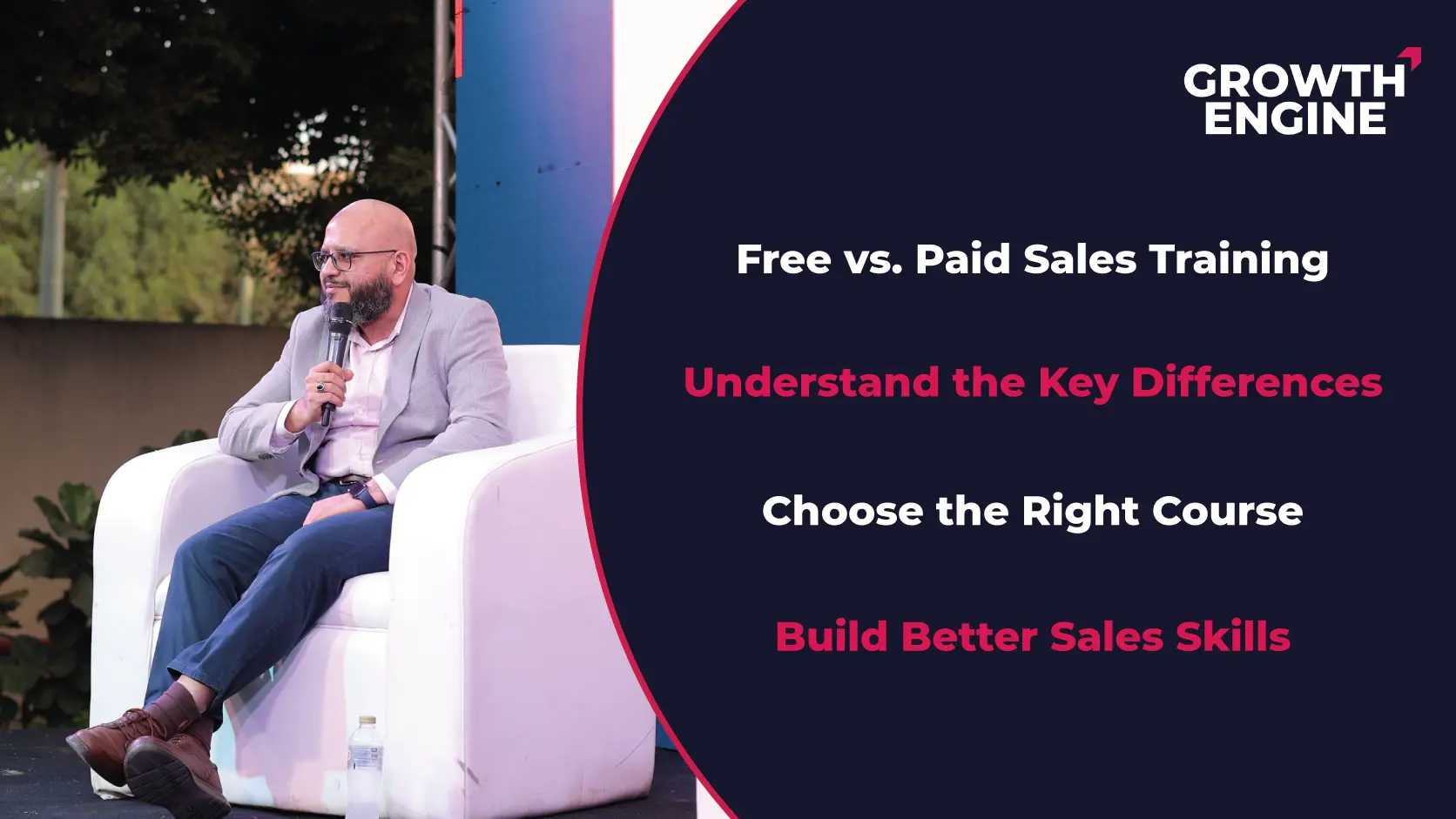
Whether you are entering the sales industry for the first time or trying to improve your existing performance, continuous learning is essential. However, one important question often comes up when looking for professional development opportunities: Should you start with a free sales skills course, or invest in paid sales training?
Both options have advantages. Free courses allow beginners to explore sales concepts without spending money, while paid programs may provide structured learning paths, practical exercises, specialized instruction, and additional guidance.
The challenge is that choosing the wrong training can cost you more than the course fee. You might spend weeks watching free videos without developing practical skills, or pay for an expensive program that does not address the challenges you face in your actual sales role.
The right decision should therefore depend on more than price. You need to consider your current experience, professional objectives, learning preferences, the quality of the curriculum, and how effectively the training connects theoretical knowledge with real sales situations.
At Growth Engine, sales training is approached as a practical investment in professional performance and business growth. The goal is not simply to understand sales terminology but to develop the ability to manage customer conversations, identify buying motivations, handle objections, negotiate confidently, and close deals more effectively.
In this guide, we will compare free and paid sales training, explain when each option makes sense, identify the essential skills worth learning, and provide a practical framework for choosing the right sales course for your career.
1. Why Is Sales Training Important for Professional Growth?
Some people believe that sales is entirely about experience. They assume that spending enough time speaking with customers will eventually make anyone a successful salesperson.
Experience certainly matters, but experience without structured learning can reinforce ineffective habits. A salesperson might repeat the same mistakes for months without understanding why customers hesitate, why deals fail, or why follow-ups do not produce results.
Sales training provides a framework for identifying these problems and developing more effective approaches.
Understanding Customer Needs
Successful selling begins with understanding the customer’s situation rather than immediately presenting a product.
For example, imagine that you are selling business management software. A potential customer asks about pricing during the first conversation.
Instead of immediately presenting a price, an effective salesperson explores the company’s size, existing challenges, operational requirements, and desired outcomes.
This approach helps connect the product’s features with the customer’s actual needs.
Improving Objection Handling
Sales professionals regularly encounter objections such as:
Your product is too expensive.
I need more time to consider the offer.
We already work with another provider.
This is not a priority right now.
I need approval from management.
Without proper training, salespeople may respond defensively, offer unnecessary discounts, or end conversations prematurely.
Training teaches you to identify the real reason behind an objection, ask better questions, and respond with relevant information.
Increasing Closing Effectiveness
Generating leads is only one part of the sales process. Converting qualified opportunities into paying customers is what ultimately generates revenue.
Sales training introduces closing techniques that help professionals recognize buying signals, communicate value, address remaining concerns, and guide customers toward a decision.
Building Better Sales Management Habits
Professional selling also requires organization.
Managing a pipeline, prioritizing opportunities, scheduling follow-ups, and monitoring conversion rates are essential activities.
Developing these capabilities helps salespeople work more efficiently and prevents valuable opportunities from being overlooked.
2. What Can You Learn from a Free Sales Skills Course?
A free sales skills course is often the most accessible starting point for people interested in developing their sales knowledge.
There are many learning resources available online, including educational videos, introductory courses, webinars, articles, and publicly accessible training materials.
These resources can provide valuable information, particularly when you are exploring the industry or trying to understand a specific sales concept.
Benefits of Free Sales Training
1. Learning Without Financial Commitment
The biggest advantage is accessibility. You can explore sales concepts without committing money to a training program.
This is particularly useful for students, career changers, and individuals considering their first sales position.
2. Exploring Different Sales Specializations
Free resources allow you to explore different areas, including:
Business-to-business sales.
Business-to-consumer sales.
Retail and direct selling.
Telephone sales.
Consultative selling.
Online and digital sales.
Negotiation and customer relationship management.
Exploring these areas can help you identify which specialization best matches your interests.
3. Flexible Learning Schedules
Most free educational resources allow you to learn at your own pace.
You can study after work, during weekends, or whenever your schedule allows.
4. Building Foundational Knowledge
Introductory courses can help you understand essential concepts such as prospecting, customer qualification, sales conversations, objection handling, and closing.
This knowledge provides a foundation for further professional development.
Limitations of Free Sales Courses
Although free training is valuable, it also has limitations.
Limited learning structure: Free educational materials are often distributed across different platforms. You may learn individual concepts without following a logical progression.
Limited practical exercises: Some courses focus heavily on explaining theories without providing realistic sales simulations or opportunities to practice.
Little personalized feedback: You may not have access to an instructor who can evaluate your performance or explain what needs improvement.
Inconsistent content quality: Not every free resource is accurate, current, or relevant to modern selling environments.
Difficulty measuring progress: Completing multiple lessons does not necessarily mean you have developed the ability to apply the concepts successfully.
For these reasons, free training can be an excellent introduction, but it may not provide everything you need to reach an advanced professional level.
3. What Makes Paid Sales Training Different?
Paid sales training programs are designed to provide a more structured learning experience, although the actual quality varies considerably between providers.
A well-designed program connects educational concepts with practical exercises and clearly defined learning objectives.
Key Benefits of Paid Training
1. Structured Learning Curriculum
A professional training program typically organizes topics into a logical sequence.
For example, beginners may start with communication and customer discovery before progressing to presentations, negotiation, objection handling, and closing.
This structure helps learners develop their skills progressively.
2. Practical Sales Applications
Sales is a performance-based profession. Knowing what negotiation means is different from being able to negotiate effectively.
Practical exercises may include:
Simulated sales calls.
Product presentation exercises.
Customer objection scenarios.
Negotiation role-playing.
Closing conversations.
Sales opportunity analysis.
These exercises help learners understand how to use their knowledge in real situations.
3. Learning from Experienced Instructors
Qualified instructors can provide professional insights, explain common mistakes, and connect training concepts with actual sales challenges.
Depending on the program, learners may also receive feedback that helps them identify specific areas for improvement.
4. Developing Advanced Sales Skills
Paid programs may cover specialized topics that introductory resources do not explore in depth.
Examples include sales psychology, consultative selling, advanced negotiation, pipeline management, and performance optimization.
5. Clear Learning Objectives
A structured program should explain what participants are expected to learn and how each training module contributes to their development.
This makes it easier to evaluate progress and identify remaining knowledge gaps.
Does Paying More Guarantee Better Training?
Absolutely not.
A high course fee does not automatically indicate high-quality training. Similarly, some free educational resources provide excellent information.
What matters is the actual value of the program.
Evaluate the curriculum, instructor experience, practical applications, learning outcomes, and relevance to your professional objectives before making a financial commitment.
4. Free vs. Paid Sales Training: A Practical Comparison
Understanding the differences between these options can make your decision much easier.
| Comparison Factor | Free Training | Paid Training |
|---|---|---|
| Cost | Usually no tuition fee | Requires financial investment |
| Curriculum | May be less structured | Often more organized |
| Practical exercises | Varies by resource | May include guided exercises |
| Instructor support | Usually limited | May offer additional guidance |
| Specialization | Often introductory | Can cover advanced subjects |
| Flexibility | Usually high | Depends on the program |
| Progress evaluation | Mostly self-directed | May include assessments |
| Best suited for | Exploring sales fundamentals | Targeted professional development |
When Should You Choose Free Training?
Free training is a suitable option when:
You are completely new to sales.
You want to understand the fundamentals before investing.
You are exploring whether sales is the right career.
You have a limited training budget.
You prefer independent learning.
You need to understand one specific concept.
For example, someone preparing for their first sales interview may benefit significantly from free introductory resources covering prospecting, customer communication, and basic sales terminology.
When Is Paid Training Worth Considering?
Paid training may be more appropriate when:
You already work in sales and want better results.
You regularly struggle with customer objections.
Your closing rate needs improvement.
You want to develop advanced negotiation skills.
You are preparing for a sales leadership position.
You manage a team that needs consistent professional development.
The important distinction is that paid training should solve a specific learning problem rather than simply provide more information.
5. How to Choose the Right Sales Course for Your Goals
Choosing the right sales course requires a clear understanding of what you want to achieve.
Use the following framework before enrolling in any program.
Step 1: Evaluate Your Current Sales Experience
Start by identifying your existing capabilities.
Ask yourself:
Have I worked in a sales position before?
Can I confidently initiate customer conversations?
Do I know how to identify customer needs?
Can I handle price objections?
Am I comfortable negotiating?
Can I move conversations toward a buying decision?
If you are a complete beginner, choose a course that covers fundamental concepts.
If you already have sales experience, consider specialized training that addresses your weaknesses.
Step 2: Define Your Professional Objective
Different career objectives require different skills.
| Professional Objective | Skills to Develop |
|---|---|
| Starting a sales career | Sales fundamentals and communication |
| Improving performance | Persuasion and objection handling |
| Closing more deals | Closing techniques and follow-up |
| Entering B2B sales | Consultative selling and negotiation |
| Becoming a sales manager | Leadership and performance management |
| Advancing professionally | Advanced negotiation and sales psychology |
A clearly defined objective prevents you from spending time learning skills that are not immediately relevant.
Step 3: Review the Course Curriculum
Never choose a course based solely on its title or promotional description.
Review the curriculum and identify the actual topics covered.
A comprehensive sales training program may include:
Understanding the modern sales process.
Identifying ideal customers.
Discovering customer needs.
Building trust and communicating value.
Presenting products and services.
Handling customer objections.
Negotiating effectively.
Closing deals and managing follow-ups.
Monitoring sales performance.
Not every program needs to cover all these subjects. However, its content should match the skills you want to develop.
Step 4: Look for Practical Learning Opportunities
Practical exercises are particularly important when evaluating a sales course.
For instance, if a program teaches price objection handling, it should explain how to identify why customers consider an offer expensive and how to communicate value without immediately reducing the price.
Look for realistic examples, role-playing activities, customer scenarios, and opportunities to practice conversations.
Step 5: Evaluate the Instructor and Training Provider
Research the instructor’s professional background and relevant sales experience.
You should also evaluate the provider’s reputation, course structure, learning objectives, and available student feedback.
Avoid relying entirely on exaggerated promises such as becoming an expert salesperson in a few days.
Professional development requires consistent learning and practice.
Step 6: Compare the Cost with the Expected Value
Think about the practical value of the skills you will acquire.
Will the course help you improve your closing conversations? Will it make you better at managing customer relationships? Will it address a weakness that currently affects your performance?
A reasonably priced course that addresses a specific professional need may be more valuable than an expensive program covering topics you already understand.
6. Essential Sales Skills Every Professional Should Develop
Regardless of whether you choose free or paid training, certain capabilities are fundamental to long-term success.
1. Communication and Active Listening
Effective sales communication is a two-way process.
You need to ask relevant questions, listen carefully, identify important information, and respond in a way that moves the conversation forward.
Active listening also helps you discover concerns that customers may not initially express.
2. Value-Based Persuasion
Persuasion should focus on connecting the customer’s needs with the value of your solution.
Rather than listing product features, explain how those features address specific problems or improve measurable business outcomes.
For example, instead of saying that software includes automated reporting, explain how automation can reduce administrative work and improve reporting efficiency.
3. Negotiation
Negotiation is essential when customers have different expectations regarding price, delivery, service, or contract terms.
Effective negotiators understand customer priorities, communicate value confidently, and look for agreements that benefit both parties.
4. Objection Handling
An objection does not always mean that a customer is unwilling to purchase.
Sometimes customers need additional information, reassurance, or clarification.
A professional salesperson identifies the concern before presenting a response.
5. Closing Techniques
Closing is about helping customers move from interest to commitment.
It requires recognizing buying signals, confirming that important concerns have been addressed, and identifying the appropriate next step.
6. Sales Pipeline Management
A strong salesperson must also manage opportunities effectively.
This includes qualifying leads, tracking conversations, scheduling follow-ups, prioritizing opportunities, and monitoring the progress of potential deals.
These organizational skills help prevent missed opportunities and improve overall productivity.
7. How to Combine Free and Paid Training for Better Results
You do not necessarily need to choose only one learning method.
A combination of free resources and targeted professional training can be an effective approach, especially when you want to control your learning expenses.
Consider following this four-stage development plan.
Stage 1: Explore the Fundamentals
Start with free resources covering sales terminology, communication, prospecting, and the basic sales process.
The objective is to understand how professional selling works.
Stage 2: Identify Your Knowledge Gaps
Evaluate your current abilities and identify the areas that require improvement.
You might discover that your biggest challenge is qualifying leads rather than communicating with customers.
Alternatively, you may be comfortable presenting products but struggle to negotiate or close deals.
Stage 3: Practice and Evaluate
Apply what you learn through simulated conversations, role-playing, and real customer interactions.
Track your performance and identify recurring mistakes.
For example, record how often customers raise price objections and whether your responses lead to productive conversations.
Stage 4: Invest in Specialized Training
Once you understand your development needs, look for a structured program that addresses those specific challenges.
This approach helps you make more informed training decisions and ensures that your investment supports a meaningful professional objective.
8. How Growth Engine Can Support Your Sales Development
If you are ready to move beyond introductory sales knowledge, specialized training can help you develop a more structured and effective selling approach.
Growth Engine focuses on developing modern sales capabilities, helping professionals strengthen their understanding of customer behavior, communication, persuasion, and the sales process.
Rather than treating sales as a collection of isolated techniques, professional development should connect these capabilities into a consistent approach that can be applied across different customer interactions.
Develop Modern Selling Techniques
Sales environments continue to evolve, and traditional approaches do not always reflect how modern customers evaluate products and services.
The Modern Sales Mastery Training is worth exploring if you want to strengthen your understanding of modern selling approaches and improve the way you manage sales conversations.
Understand the Psychology Behind Buying Decisions
Customers do not make purchasing decisions based on product features alone. Their motivations, perceptions, concerns, and emotional responses can all influence their choices.
The Sales Mastery for the Unconscious Mind provides an opportunity to explore the relationship between sales techniques, psychology, and customer decision-making.
Compare Available Sales Training Options
Still deciding which program is right for you?
Explore the guide to Best Sales Courses in Egypt 2026 to learn more about available training opportunities and compare options according to your professional goals.
The best program is not necessarily the most expensive or the most popular. It is the one that addresses your actual development needs.
9. How to Measure the ROI of Sales Training
Completing a course is not the ultimate measure of success.
The real objective is to translate what you learn into improved professional performance.
To evaluate the effectiveness of sales training, establish performance benchmarks before beginning the program and compare them with your results afterward.
Consider monitoring the following metrics:
| Sales Metric | What It Measures |
|---|---|
| Conversion Rate | Percentage of prospects who become customers |
| Deal Closing Rate | Ability to convert qualified opportunities |
| Average Deal Value | Average revenue generated per closed deal |
| Sales Cycle Length | Time required to complete a sale |
| Follow-Up Effectiveness | Success of follow-up activities |
| Customer Retention | Ability to maintain customer relationships |
For example, suppose a salesperson contacts 100 qualified prospects and closes 10 deals.
Their conversion rate is 10%.
After improving their customer discovery and closing skills, they close 15 deals from the same number of prospects.
Their conversion rate increases to 15%.
This represents a meaningful improvement, although other factors, including lead quality, pricing, product positioning, and market conditions, should also be considered.
You can also estimate financial ROI by comparing the additional profit generated through improved sales performance against the cost of training.
The purpose is to ensure that professional development contributes to measurable business outcomes rather than simply increasing the number of completed courses on your profile.
Conclusion: Should You Choose a Free Sales Skills Course or Paid Training?
Choosing between a free sales skills course and paid training depends on your experience, professional goals, budget, and the level of development you need.
Free courses are excellent starting points for beginners who want to understand the fundamentals of selling without making an immediate financial commitment.
Paid training may be a better investment when you need structured development, practical exercises, specialized instruction, or support in improving specific sales capabilities.
However, price should never be your only decision-making factor. Evaluate the curriculum, practical value, instructor experience, and relevance to your professional objectives.
At Growth Engine, you can explore specialized sales training opportunities designed to help you understand modern selling techniques, improve customer conversations, and develop more effective sales capabilities.
Start by identifying the skills you need to improve, explore the Growth Engine training catalog, and take the next step toward stronger sales performance and long-term career growth.
Frequently Asked Questions
1. Is there a free sales skills course for beginners?
Yes. Many online platforms provide free introductory sales courses covering communication, prospecting, customer needs, and basic selling techniques. Choose a course with a structured curriculum and practical examples.
2. What is the difference between free and paid sales training?
Free training provides accessible learning resources, usually focused on foundational knowledge. Paid training may offer structured curricula, practical exercises, specialized instruction, and additional support.
3. Can I learn sales skills without previous experience?
Absolutely. Beginners can develop fundamental sales skills through educational resources, practical exercises, and consistent practice. Starting with communication and customer discovery is a useful approach.
4. What are the most important sales skills to learn?
Essential sales skills include communication, active listening, persuasion, negotiation, objection handling, closing, and pipeline management. The most important priorities depend on your role and professional objectives.
5. How do I choose the right sales course?
Start by identifying your current skill level and professional goals. Then evaluate the curriculum, instructor experience, practical exercises, student feedback, and relevance to your development needs.
6. Is paid sales training worth the investment?
Paid training can be worthwhile when it addresses specific skill gaps and provides practical learning opportunities. Evaluate the program’s quality and potential professional value before enrolling.
7. Why is sales training important for beginners?
Sales training helps beginners understand the sales process, communicate with customers, handle objections, and develop confidence. It also provides a structured foundation for building practical experience.
8. How long does it take to develop sales skills?
The timeline depends on your starting level, learning objectives, and practice frequency. Basic concepts can be learned relatively quickly, but developing professional selling abilities requires continuous practice and feedback.
9. Are free sales courses enough to get a sales job?
Free courses can provide useful foundational knowledge and help you prepare for entry-level positions. However, employers also value communication abilities, practical experience, and the ability to demonstrate sales-related competencies.
10. Can sales training improve closing rates?
Yes. Effective training can improve customer discovery, objection handling, negotiation, and closing conversations. Applying these skills consistently and monitoring performance metrics helps determine their impact on actual sales results.