Currently Empty: EGP0.00
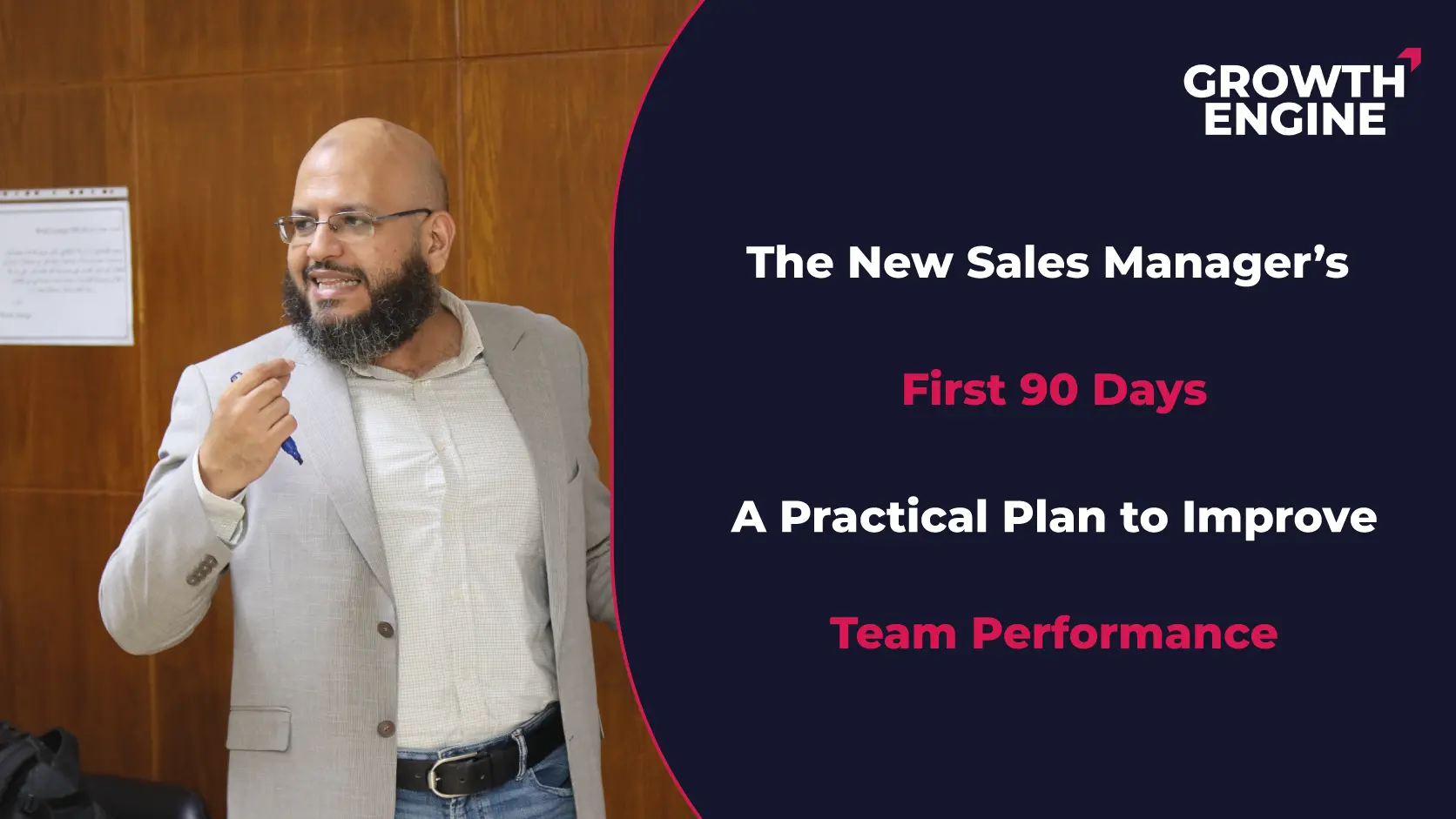
The New Sales Manager’s First 90 Days: A Practical Plan to Improve Team Performance
October 27, 2026
Stepping into a sales management role is an important career milestone. However, the transition from individual contributor to team leader introduces a different set of responsibilities. Instead of focusing primarily on your own sales targets, you must now help an entire team generate revenue, manage opportunities, maintain customer relationships, and deliver predictable results.
You may inherit a team with different experience levels, an inconsistent sales process, an unreliable pipeline forecast, or a group of talented representatives who struggle to convert opportunities into closed deals. You may also face immediate pressure from senior leadership to demonstrate progress before you have fully understood the business.
The biggest mistake a new sales manager can make is attempting to change everything immediately. Introducing new targets, restructuring the pipeline, or replacing established processes without understanding their underlying problems can reduce trust and disrupt productivity. Early success requires a more disciplined approach: observe, diagnose, prioritize, implement, and measure.
A structured 90-day plan provides the framework for doing exactly that. The first month focuses on understanding the team and establishing a performance baseline. The second month translates your findings into practical improvements. The third month evaluates the results, strengthens successful practices, and establishes a sustainable plan for continued growth.
This approach requires more than monitoring revenue. Effective sales leadership combines analytical thinking, coaching, communication, pipeline management, and the ability to turn business objectives into clear individual actions.
At Growth Engine, sales development is approached as a practical process that connects sales skills with measurable business outcomes. The objective is not simply to encourage representatives to make more calls or attend more meetings. It is to improve the quality of opportunities, strengthen conversion rates, increase sales efficiency, and build a repeatable system for revenue generation.
Whether you are managing a sales team for the first time, joining a new organization, or taking responsibility for an underperforming department, the following roadmap will help you use your first 90 days strategically.
By the end of this period, you should have a clearer understanding of your team’s strengths, a more reliable pipeline, defined performance expectations, and a development plan that supports both individual growth and organizational goals.
2. Days 1–30: Understand the Business Before Making Changes
Audit Sales Performance and Establish a Baseline
Your first responsibility as a new sales manager is to understand the current state of the business. Before deciding that representatives need to work harder, investigate whether the underlying issue involves lead quality, qualification standards, conversion rates, deal size, or the sales process itself.
Review performance data from the previous three to six months, adjusting the period to reflect your organization’s sales cycle. Look beyond total revenue and examine the indicators that explain how revenue is generated.
Start with these metrics:
Quota attainment: The percentage of an individual or team’s sales target achieved during a specific period.
Win rate: The proportion of qualified opportunities that become closed-won deals.
Conversion rates: The percentage of opportunities progressing between pipeline stages.
Average deal size: The average revenue generated by closed deals.
Sales cycle length: The time required to move a qualified opportunity through the sales process.
Forecast accuracy: The difference between projected and actual sales results.
Lead response time: How quickly representatives respond to new inquiries.
Pipeline coverage: The value of qualified opportunities relative to the upcoming sales target.
Interpret these metrics together rather than in isolation. A high volume of opportunities combined with a low win rate may indicate weak qualification or ineffective discovery conversations. Strong conversion rates combined with insufficient revenue may suggest that deal sizes are too small or the pipeline lacks enough opportunities.
Segment the data by representative, lead source, product, customer segment, and deal size. Team averages can conceal important differences that become visible when performance is examined more closely.
Your objective during the first month is not to prove that you can improve every metric immediately. It is to establish a reliable baseline that helps you identify where managerial attention will produce the greatest impact.
Meet Every Sales Representative Individually
Schedule individual conversations with each team member. These meetings should help you understand how representatives work, what obstacles they face, and which resources would help them perform more effectively.
Ask questions such as:
Which stage of the sales process is most challenging for you?
What objections do you hear most frequently?
What prevents you from consistently achieving your targets?
Which tools or information would make your work easier?
What sales skill would you most like to improve?
What do you believe the team should change first?
Listen carefully and compare the responses with actual performance data. A representative might believe pricing is the main obstacle, while call reviews reveal that the product’s value is not being communicated clearly. Another may blame lead quality when the underlying problem is inconsistent qualification.
Avoid making promises before understanding what is possible. Instead, acknowledge concerns, identify patterns, and explain how you will prioritize improvements.
These conversations also help you establish trust. Representatives are more likely to accept coaching and accountability when they believe their manager understands the realities of their work.
Observe the Sales Process From Start to Finish
Spend time observing sales calls, reviewing customer interactions, and examining follow-up messages and proposals, while respecting company privacy policies and applicable consent requirements.
Look for how representatives discover customer needs, identify decision-makers, communicate value, handle objections, and agree on next steps.
Pay particular attention to whether sales conversations focus on the customer’s business problem or become product presentations too early.
Map the sales process into clearly defined stages, such as qualification, discovery, solution presentation, negotiation, and closing. Establish specific criteria for moving an opportunity between stages.
For example, a proposal should not automatically count as a high-probability opportunity simply because it has been sent. The representative should understand the customer’s requirements, decision process, and next steps before assigning a realistic closing probability.
Clear stage definitions improve pipeline visibility and help the entire team evaluate opportunities consistently.
Identify Your Three Highest-Priority Problems
After reviewing performance, meeting the team, and observing sales conversations, resist the temptation to fix everything at once.
Select three priorities based on their potential business impact, your ability to influence them, and the time required to implement improvements.
Your priorities might include:
Improving lead qualification to reduce time spent on unsuitable prospects.
Increasing the conversion rate from discovery meetings to proposals.
Improving CRM accuracy so that forecasts reflect genuine opportunities.
Document the current performance level, the suspected cause of each problem, and the evidence supporting your assessment.
By day 30, you should have a performance baseline, an understanding of individual strengths and weaknesses, a mapped sales process, and three clearly defined improvement priorities.
These findings will become the foundation of your implementation plan.
3. Days 31–60: Turn Insights Into Measurable Improvements
Set Clear, Measurable Sales Objectives
Once you understand the team’s challenges, translate your priorities into measurable objectives.
A useful framework is SMART: specific, measurable, achievable, relevant, and time-bound.
Instead of telling representatives to improve follow-up, establish an objective such as increasing the proportion of active opportunities with a documented next step and scheduled follow-up from 60% to 90% within one month. These figures are illustrative; actual targets should reflect your baseline and business circumstances.
Every objective should have an owner, a deadline, a measurement method, and a regular review point.
Avoid assigning identical improvement targets to everyone without considering experience, territory potential, lead distribution, and deal complexity. A new representative may need to improve discovery skills, while an experienced account executive may benefit more from advanced negotiation coaching.
Improve Sales Pipeline Management
Your pipeline should provide a realistic view of future revenue, not simply a list of potential deals.
Review open opportunities with representatives and assess whether each one has a genuine business need, an identifiable decision-maker, a plausible purchasing timeline, and an agreed next step.
Classify opportunities into three practical categories:
Active opportunities: Qualified prospects with clear needs and meaningful next steps.
Developing opportunities: Prospects showing interest but missing important qualification information.
Stalled opportunities: Deals without meaningful progress or a clear path to a decision.
For stalled deals, determine whether a targeted re-engagement plan is appropriate or whether the opportunity should be closed out of the active pipeline.
Do not prioritize opportunities based on deal value alone. A large opportunity without decision-maker engagement may be less likely to close than a smaller deal with a confirmed need, an established buying process, and active customer participation.
Standardized qualification criteria make forecasts more credible and help representatives spend their time on opportunities with the strongest potential.
Establish a Consistent Management Rhythm
Sales management requires regular communication, but excessive meetings can reduce selling time and create unnecessary administrative work.
Build a manageable operating rhythm that supports visibility, coaching, and accountability.
A practical structure might include:
A short weekly team meeting focused on priorities, major opportunities, and blockers.
Regular one-to-one coaching sessions with individual representatives.
A monthly performance review covering revenue, conversion, pipeline health, and forecast accuracy.
Targeted deal reviews for complex opportunities that require strategic support.
Every meeting should have a clear purpose and an actionable outcome.
Instead of asking why a deal has not closed, discuss what the representative has learned about the customer, what is preventing a decision, which action could move the opportunity forward, and when that action will happen.
Review reports before meetings whenever possible. Use the discussion to solve problems and develop judgment rather than reading information that everyone can already access.
Build a Sales Coaching Program Around Performance Gaps
Effective coaching addresses specific behaviors that affect sales outcomes.
If representatives struggle to uncover customer needs, prioritize discovery questions, active listening, and problem diagnosis. If opportunities repeatedly stall during negotiation, focus on value communication, objection handling, and negotiating commercial terms without unnecessary discounting.
A practical weekly coaching cycle can follow six steps:
Identify one high-priority skill gap.
Explain a framework for addressing it.
Practice using a realistic customer scenario.
Provide specific, behavior-based feedback.
Apply the skill in live sales conversations.
Review progress during the following week.
Measure application rather than attendance. A representative who completes a negotiation workshop should demonstrate improved preparation, clearer value communication, or more effective responses to price objections.
Sales managers who want to strengthen their own planning, leadership, and performance management capabilities can explore Growth Engine’s Professional Sales Management course. Structured development can complement day-to-day coaching by helping managers build a more systematic approach to leading sales teams.
Balance Accountability With Motivation
High-performing teams need both encouragement and accountability. Representatives should understand what success looks like, receive regular feedback, and have access to the resources required to meet expectations.
Recognize behaviors that support sustainable revenue, including strong qualification, accurate forecasting, customer-focused communication, and collaboration.
Revenue alone does not tell the whole story. Rewarding closed deals without considering deal quality can encourage unnecessary discounts, unrealistic commitments, or sales to customers who are unlikely to succeed with the product.
When performance falls short, identify the cause before deciding on corrective action. The problem may involve capability, effort, lead quality, workload, unclear expectations, or insufficient tools.
Agree on a focused improvement plan with measurable actions and review dates. This approach makes accountability more transparent while giving employees a fair opportunity to improve.
By day 60, the team should have clearer operating routines, defined coaching priorities, improved pipeline discipline, and early evidence of whether the changes are working.
4. Days 61–90: Consolidate Results and Build Sustainable Growth
Compare Performance Against Your Original Baseline
The final month should focus on evaluating results and understanding what produced them.
Compare current performance with the baseline established during the first 30 days. Review revenue, quota attainment, conversion rates, average deal size, sales cycle length, forecast accuracy, and CRM data quality.
If revenue has increased, investigate the reasons. Did the team improve its win rate? Did average deal size increase? Did representatives become more effective at qualifying opportunities? Did changes in lead volume or market conditions contribute to the improvement?
If results are below expectations, avoid assuming that the entire plan has failed. Some changes require longer evaluation periods, particularly in businesses with lengthy sales cycles.
Examine leading indicators alongside closed revenue. Improvements in qualified meetings, opportunity progression, customer engagement, and next-step completion can indicate progress before financial results fully reflect it.
Use comparable periods where possible, accounting for seasonality, pricing changes, shifts in lead sources, and other external factors.
Turn Successful Behaviors Into Repeatable Processes
When a sales practice demonstrates positive results, document it so the entire team can benefit.
Create practical playbooks covering:
Customer qualification questions.
Discovery meeting structures.
Follow-up communication guidelines.
Common objection-handling approaches.
CRM opportunity requirements.
Preparation for high-value negotiations.
Keep these resources concise, accessible, and easy to update. A playbook should help representatives make better decisions during real customer interactions rather than become another document that sits unused.
Invite team members to contribute examples from successful deals. Their involvement helps ensure the material reflects real customer conversations and market conditions.
Standardization should create consistency without eliminating individual judgment. Representatives still need the flexibility to adapt their approach to different customer needs and buying situations.
Create Individual Development Plans
By day 90, you should understand each representative’s strengths, skill gaps, and development opportunities more clearly.
Use that knowledge to build an individual plan for the next quarter.
One representative may need to strengthen discovery conversations, while another may benefit from advanced negotiation training or strategic account management. A high-performing employee may be ready to mentor colleagues or take on additional responsibilities.
Each development plan should specify the skill to improve, the activities required, the expected behavioral change, the measurement method, and the review date.
Managers should also evaluate their own performance. Consider whether your coaching is effective, whether meetings produce decisions, and whether representatives have greater clarity and independence than they did at the beginning of the period.
For additional structured learning, explore Growth Engine’s Sales Management Training Course, particularly if you want to strengthen the systems and leadership capabilities needed to support long-term team development.
Build the Next Quarter’s Sales Strategy
The end of your first 90 days should mark the beginning of a more informed operating cycle.
Use your findings to select the next set of priorities. Depending on your business, these might include improving customer retention, expanding into a new segment, increasing average deal value, reducing the sales cycle, or strengthening the accuracy of revenue forecasts.
Rank initiatives according to expected impact, implementation cost, resource requirements, and strategic importance.
Assign an owner to each initiative and define the indicators that will demonstrate progress.
If you are evaluating development options for yourself or your team, Growth Engine’s article on the advantages and disadvantages of interactive sales courses can help you consider how participation, practice, and feedback fit your learning requirements.
The objective is not to launch as many initiatives as possible. It is to identify the changes most likely to produce meaningful improvements, execute them consistently, and refine the strategy as new evidence emerges.
5. Essential Sales Performance Metrics Every Manager Should Track
A useful sales dashboard combines outcome metrics with leading indicators that help explain future results.
| Metric | What It Reveals | How to Use It |
|---|---|---|
| Quota attainment | Progress toward revenue targets | Evaluate individual and team performance |
| Win rate | Effectiveness in converting qualified opportunities | Identify weaknesses in the sales process |
| Stage conversion | Movement between pipeline stages | Locate bottlenecks and coaching needs |
| Average deal size | Revenue generated per closed deal | Assess opportunities to improve deal value |
| Sales cycle length | Time required to close opportunities | Identify unnecessary delays |
| Forecast accuracy | Reliability of projected revenue | Improve planning and resource allocation |
| CRM data quality | Completeness and reliability of opportunity information | Improve decisions and follow-up discipline |
No single benchmark applies to every sales organization. Appropriate targets depend on industry, pricing, customer acquisition channels, sales cycle length, and revenue model.
Start with your own baseline and establish realistic improvement targets. Review the dashboard regularly, but avoid measuring so many indicators that the team loses sight of the outcomes that matter most.
6. Common Mistakes New Sales Managers Should Avoid
Changing Everything Before Understanding the Business
Replacing sales processes, territories, or incentive structures too quickly can damage trust and disrupt performance. Understand why existing systems were created before deciding which changes are necessary.
Focusing Exclusively on Revenue
Current revenue may be strong because of a few unusually large deals, even when the pipeline is deteriorating. Track leading indicators to identify future risks before they affect results.
Managing Every Representative the Same Way
Different representatives require different levels of guidance. New employees may need structured support, while experienced professionals may perform better with autonomy and targeted coaching.
Turning Meetings Into Constant Supervision
Excessive oversight reduces selling time and discourages independent problem-solving. Focus on outcomes, commitments, and material risks while giving representatives appropriate freedom to execute.
Training Without Measuring Results
Completing a course does not automatically improve performance. Define the desired behavioral change, observe its application, and assess the relevant metrics while accounting for other factors that influence results.
Ignoring Team Feedback
Managers can overlook practical obstacles when they rely exclusively on dashboards. Regular conversations help reveal customer concerns, process inefficiencies, and resource constraints that numbers alone may not explain.
7. How Growth Engine Can Support Your Sales Management Development
Effective sales management combines commercial analysis, leadership, coaching, communication, and strategic planning. These capabilities can be developed systematically rather than left entirely to trial and error.
Growth Engine provides a starting point for exploring structured sales and management development. When evaluating a training program, look for practical content that addresses the challenges you identified during your first 90 days.
Depending on your needs, useful development areas may include setting sales objectives, managing pipelines, improving forecasting, conducting effective coaching sessions, handling negotiations, and developing individual representatives.
Before choosing a course, define the capability you want to strengthen. Are you struggling to forecast revenue accurately? Do you need a more consistent approach to coaching? Are representatives having difficulty moving opportunities through the pipeline?
Your answers will help you select training that addresses a real business requirement.
Evaluate the value of that training through application. Look for improvements in decision-making, sales behaviors, process consistency, and the relevant performance indicators rather than relying only on course completion.
A structured development plan, combined with practical experience and regular feedback, can help you become a more effective manager while supporting stronger team performance.
Conclusion: Build a Stronger Sales Team in Your First 90 Days
The success of a new sales manager is not determined by how many changes they introduce. It depends on their ability to understand the business, identify the right priorities, develop their people, and turn decisions into measurable outcomes.
During days 1–30, focus on understanding performance, listening to the team, and diagnosing the biggest challenges. During days 31–60, implement targeted improvements, strengthen pipeline management, and connect coaching to specific performance gaps. During days 61–90, evaluate the results, standardize effective practices, and create a sustainable plan for the next quarter.
Keep your decisions grounded in evidence. Make coaching part of the team’s daily work, establish clear accountability, and give representatives the tools and autonomy they need to succeed.
Most importantly, treat the first 90 days as the foundation of an ongoing improvement process rather than a one-time management project.
Ready to strengthen your sales leadership capabilities? Explore Growth Engine’s sales management and professional development courses to build practical skills, improve team effectiveness, and support sustainable revenue growth.
Frequently Asked Questions
1. What should a new sales manager do first?
A new sales manager should review historical performance, assess the sales pipeline, and meet individually with team members to understand their challenges. This creates a reliable baseline for prioritizing improvements.
2. What is the best 90-day plan for a sales manager?
The first 30 days should focus on diagnosis and understanding the business, days 31–60 on implementing improvements, and days 61–90 on evaluating results and standardizing successful practices.
3. What are the most important sales manager skills?
Essential skills include leadership, data analysis, communication, coaching, negotiation, forecasting, and pipeline management. Strong managers also know how to establish accountability without unnecessarily limiting their team’s independence.
4. How can a sales manager improve team performance?
A manager can improve performance by identifying the causes of weak results, strengthening sales skills, improving lead qualification, setting clear objectives, and reviewing performance indicators consistently. Each improvement should be evaluated against measurable outcomes.
5. What sales KPIs should a manager track?
Important sales KPIs include quota attainment, win rate, stage conversion, average deal size, sales cycle length, forecast accuracy, and pipeline coverage. The appropriate combination depends on the company’s sales model and business objectives.
6. How can sales pipeline management be improved?
Establish clear qualification criteria, define the requirements for each pipeline stage, and ensure every active opportunity has an agreed next step. Regular reviews help identify stalled deals and improve forecast reliability.
7. How should a sales manager coach an underperforming representative?
Identify the underlying performance gap through data, observation, and individual conversations. Then create a focused improvement plan with specific actions, appropriate coaching, measurable expectations, and regular review dates.
8. How often should sales managers hold team meetings?
Many teams benefit from a short weekly meeting, regular individual coaching sessions, and a monthly performance review. The ideal frequency depends on team size, sales cycle complexity, and the level of support representatives require.
9. Is sales management training worth it for new managers?
Structured training can help new managers develop planning, leadership, coaching, forecasting, and performance management skills. Its value depends on how well the content addresses real workplace challenges and how consistently the skills are applied.
10. How do you measure success after 90 days as a sales manager?
Compare current performance with the original baseline and evaluate both revenue outcomes and leading indicators. Also assess pipeline quality, coaching effectiveness, process consistency, and whether the team is better positioned to achieve future targets.