Currently Empty: EGP0.00
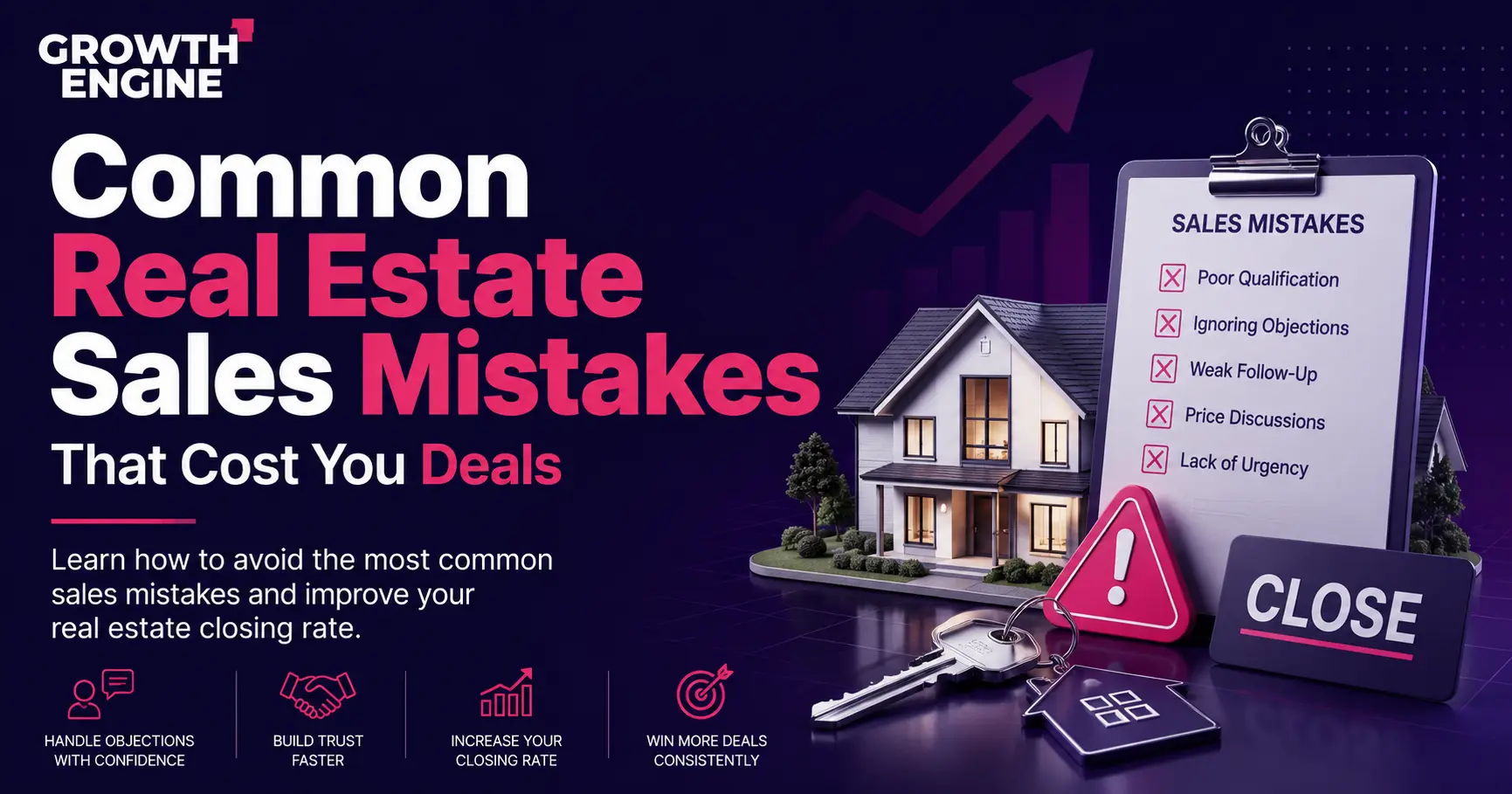
Closing a real estate deal takes much more than presenting an attractive property or offering a competitive price. Successful real estate sales depend on how effectively a sales professional guides prospects through the buying journey, builds trust, handles objections, and creates confidence before asking for a commitment.
Many promising deals are lost every day—not because buyers aren’t interested, but because salespeople make avoidable mistakes during conversations, follow-ups, or negotiations. In today’s competitive property market, buyers are more informed than ever. They compare projects online, research developers, and speak with multiple sales representatives before making a decision.
This means that even small communication mistakes can push a prospect toward a competitor. Understanding the most common real estate sales mistakes is therefore essential for anyone who wants to improve buyer conversations and increase their real estate closing rate.
At Growth Engine, we believe that mastering real estate sales requires more than persuasive communication. It demands a structured sales process, a deep understanding of buyer psychology, and modern selling techniques that help professionals guide prospects from initial interest to successful closing.
In this guide, you’ll learn the most common real estate sales mistakes, understand why they cause deals to fall apart, and discover practical strategies to improve conversations, handle real estate buyer objections, and increase your closing rate.
Why Do Real Estate Sales Professionals Lose Deals?
Many salespeople assume that losing a deal simply means the buyer wasn’t serious.
In reality, buyers often intend to purchase but decide against moving forward because of the sales experience itself.
Some of the most common reasons include:
- Poor discovery conversations.
- Weak trust-building.
- Focusing on features instead of customer needs.
- Mishandling buyer objections.
- Inconsistent follow-up.
- Applying unnecessary pressure.
- Limited market or product knowledge.
Eliminating these mistakes can significantly improve closing rates without increasing the number of leads.
The Most Common Real Estate Sales Mistakes That Cost You Deals
1. Talking About the Property Before Understanding the Buyer
One of the biggest mistakes in real estate sales is immediately presenting the project before understanding the buyer’s goals.
Instead, begin with discovery questions such as:
- Are you buying for investment or personal use?
- What’s your target budget?
- When do you plan to purchase?
- What matters most in your decision?
- Have you considered similar developments?
These questions allow you to tailor your presentation instead of delivering a generic sales pitch.
Developing strong discovery skills is especially important for professionals who want to become more effective in property sales. You can also read our guide on how to become a successful real estate sales professional for a broader look at the skills required in the industry.
2. Selling Features Instead of Value
Many property consultants spend too much time listing project features.
However, buyers don’t purchase swimming pools, clubhouses, or premium finishes—they purchase the value those features create.
Instead of saying:
“The project is close to the main highway.”
Explain the benefit:
“This location reduces your daily commute while increasing the property’s long-term investment value.”
People buy outcomes, not specifications.
3. Discussing Price Too Early
the property’s long-term investment value.”
People buy outcomes, not specifications.
3. Discussing Price Too Early
Price should rarely be the first topic of conversation.
If buyers hear the price before understanding the property’s value, they’ll naturally compare numbers rather than benefits.
Instead, focus first on:
- Investment potential.
- Lifestyle improvements.
- Location advantages.
- Flexible payment plans.
- Long-term appreciation.
Once buyers recognize the overall value, pricing becomes part of a larger investment discussion rather than the only deciding factor.
4. Failing to Build Trust
Trust is one of the strongest drivers of successful real estate closing.
Buyers want confidence before making one of the biggest financial decisions of their lives.
Trust grows through:
- Honest communication.
- Accurate information.
- Transparency.
- Professional follow-up.
- Delivering on promises.
Every positive interaction strengthens the relationship and increases the likelihood of closing.
5. Poor Lead Qualification
Not every prospect is ready to buy.
Many real estate sales professionals spend valuable hours with prospects who lack the budget, authority, or timeline to move forward.
Effective real estate lead qualification should identify:
- Budget.
- Buying timeline.
- Purchase motivation.
- Decision makers.
- Financing readiness.
Better qualification means more productive sales conversations and higher closing efficiency.
6. Handling Real Estate Buyer Objections Defensively
One of the biggest mistakes in real estate sales is treating buyer objections as rejection.
In reality, most real estate buyer objections indicate genuine interest. Buyers ask questions because they want reassurance before making a significant financial commitment.
Instead of becoming defensive or trying to overcome objections immediately, follow this simple framework:
- Listen without interrupting.
- Acknowledge the buyer’s concern.
- Ask follow-up questions to uncover the real issue.
- Respond with facts, market insights, or relevant examples.
- Confirm that the concern has been addressed before moving forward.
When handled professionally, objections become opportunities to strengthen trust rather than obstacles that end the conversation.
Improve Your Real Estate Sales, Objection Handling, and Closing Skills
Sales professionals who want to master objection handling, negotiation, buyer communication, and closing techniques can benefit from Growth Engine’s Real Estate Sales Professional training, where practical real estate selling frameworks are applied to real-world sales situations.
Explore the Real Estate Sales Training Course
7. Inconsistent Follow-Up
Many sales representatives assume that a buyer who doesn’t respond after the first meeting isn’t interested.
In reality, purchasing real estate often requires multiple conversations, internal family discussions, financing decisions, and market comparisons.
Professional follow-up should provide value instead of pressure.
Examples include:
- Sharing updated project information.
- Sending new payment plans.
- Providing market insights.
- Inviting buyers to site visits.
- Answering additional questions.
- Comparing suitable property options.
Consistent, value-driven follow-up keeps your project top of mind while strengthening buyer confidence.
8. Never Asking for the Sale
Some salespeople deliver excellent presentations, answer every question, build rapport—and then end the meeting without asking the buyer to take the next step.
Closing isn’t about pressuring the customer. It’s about confidently guiding them toward a logical decision.
Examples of a clear next step include:
- Scheduling a property viewing.
- Reserving a unit.
- Completing application paperwork.
- Paying the reservation deposit.
- Setting the next meeting.
Without a clear call to action, even highly interested buyers may postpone their decision indefinitely.
How to Increase Your Real Estate Closing Rate
Successful real estate closing follows a repeatable process rather than relying on luck or natural persuasion.
High-performing sales professionals consistently:
- Understand buyer needs.
- Build trust early.
- Present personalized solutions.
- Handle objections professionally.
- Follow up consistently.
- Ask for commitment at the right time.
Organizations that standardize this sales process can build a more consistent approach to converting opportunities into successful deals.
Improve the Entire Sales Process—Not Just Your Closing Skills
Many professionals believe success in real estate sales depends entirely on persuasion.
In reality, closing is simply the final outcome of an effective sales process.
A strong sales system includes:
- Lead qualification.
- Opportunity management.
- Consistent follow-up.
- Performance measurement.
- Customer relationship management.
- Continuous coaching.
Professionals and sales leaders who want to build a more complete sales management system can explore Growth Engine’s Sales Management Professionalism course, which focuses on areas such as forecasting, pipeline management, KPI tracking, and sales leadership.
Modern Selling Is the Future of Real Estate Sales
Today’s buyers have access to more information than ever before.
Before speaking with a sales representative, they often research projects, compare prices, read reviews, and evaluate competitors.
Traditional sales techniques that rely on pressure or scripted presentations are becoming less effective.
Modern selling focuses on:
- Asking thoughtful questions.
- Listening more than talking.
- Understanding buyer psychology.
- Providing expert guidance.
- Building trust before presenting solutions.
- Creating long-term relationships instead of chasing quick sales.
Professionals looking to strengthen these skills can explore Growth Engine’s Modern Selling Professional training, which focuses on practical sales frameworks designed to improve customer conversations, relationships, objection handling, and closing.
Conclusion
Most real estate sales mistakes don’t happen because salespeople lack motivation—they happen because they follow outdated habits, skip important discovery steps, mishandle buyer objections, or fail to guide prospects through a structured sales process.
Eliminating these mistakes allows sales professionals to build stronger relationships, increase buyer confidence, and convert more opportunities into successful transactions.
At Growth Engine, we help sales professionals transform their approach through practical, results-driven training programs. Whether you’re looking to improve objection handling, strengthen negotiation skills, or build a repeatable sales process, our courses provide the tools and frameworks needed to achieve better results in today’s competitive real estate market.
Ready to Improve Your Real Estate Sales Performance?
Develop your real estate sales skills with practical training focused on understanding buyers, presenting property value, managing objections, negotiating professionally, and closing deals with greater confidence.
Explore the Real Estate Sales Professional Course
Frequently Asked Questions
What are the most common real estate sales mistakes?
The most common mistakes include talking about the property before understanding buyer needs, focusing on features instead of value, discussing price too early, poor follow-up, and failing to ask for the sale.
Why do real estate sales deals fail?
Many deals fail because buyers don’t receive enough trust, guidance, or personalized communication throughout the sales process—not necessarily because they aren’t interested.
How should I handle real estate buyer objections?
Listen carefully, understand the real concern, acknowledge the buyer’s perspective, provide evidence-based responses, and confirm the objection has been resolved before continuing.
Is follow-up important in real estate sales?
Absolutely. Most buyers require multiple interactions before making a purchase decision. Consistent, value-driven follow-up can improve the chances of converting interested prospects.
When should I discuss pricing?
Price should be introduced after the buyer understands the property’s value, investment potential, and overall benefits rather than at the beginning of the conversation.
How can I improve my real estate closing rate?
Improve buyer qualification, build trust, personalize presentations, handle objections professionally, maintain consistent follow-up, and confidently ask for the next commitment.
Why is buyer qualification important?
Lead qualification helps sales professionals focus on serious buyers, improving productivity while reducing time spent on low-potential opportunities.
What makes modern real estate selling different?
Modern selling prioritizes buyer psychology, consultative conversations, trust-building, and long-term relationships instead of aggressive sales tactics.
Do sales training programs improve real estate sales performance?
Structured training helps professionals improve communication, negotiation, objection handling, and closing skills, giving them a more consistent framework for managing the sales process.
Can experienced salespeople still benefit from sales training?
Absolutely. Even experienced professionals improve performance by learning modern sales frameworks, updated customer behavior insights, and advanced closing strategies.