Currently Empty: EGP0.00
One of the biggest misconceptions in sales is that closing a deal depends entirely on delivering a great presentation or making a persuasive first impression. In reality, the first meeting is only the beginning of the buyer’s decision-making journey. Most prospective customers don’t make purchasing decisions immediately—they research, compare alternatives, evaluate risks, consult stakeholders, and review budgets before moving forward.
This is where customer follow-up becomes one of the most valuable skills any sales professional can develop.
Unfortunately, many salespeople approach follow-up in the wrong way. Some disappear after sending a proposal, assuming the customer will respond when they’re ready. Others make the opposite mistake by calling repeatedly or sending constant reminders that make prospects feel pressured rather than supported. Both approaches reduce the chances of winning the deal.
Effective follow-up is not about reminding people that you’re waiting for an answer. Instead, it’s about maintaining meaningful communication that helps prospects move confidently through their buying journey. Every interaction should answer a question, remove uncertainty, provide valuable insights, or reinforce why your solution is the right fit.
Today’s buyers are more informed than ever. Before speaking with a salesperson, they often research online, compare competitors, read reviews, and educate themselves about available solutions. As a result, businesses no longer compete solely on price or product quality—they compete on the overall buying experience they provide.
Modern sales teams understand that following up with customers is part of that experience. When done correctly, follow-up builds trust, positions the salesperson as a trusted advisor, and keeps the conversation moving naturally without creating unnecessary pressure.
Research consistently shows that many successful deals are closed only after multiple touchpoints. Yet countless sales opportunities are lost because representatives either stop following up too early or rely on repetitive messages that fail to deliver value.
At Growth Engine, we believe that successful selling starts with understanding buyers—not convincing them. Our sales training programs teach professionals how to build relationships, manage the sales pipeline effectively, and communicate in ways that increase trust, improve conversion rates, and create sustainable revenue growth.
In this guide, you’ll learn how to follow up with prospective customers professionally, avoid common follow-up mistakes, choose the right timing, and use proven sales strategies to increase conversions without ever sounding pushy.
Why Customer Follow-Up Is the Most Important Stage of the Sales Process
Many sales professionals think their job ends once they’ve delivered a proposal.
In reality, that’s when the customer’s decision-making process truly begins.
After receiving your proposal, prospects typically start to:
- Compare different vendors.
- Review pricing and budgets.
- Evaluate implementation risks.
- Discuss options with decision-makers.
- Measure expected ROI.
- Prioritize business needs.
During this period, uncertainty naturally increases.
Questions arise.
Competitors reach out.
Priorities shift.
Without consistent and valuable customer follow-up, even highly interested prospects can lose momentum or choose another provider.
Professional follow-up isn’t about asking whether they’ve made a decision.
It’s about helping them make the right decision.
Understanding the Modern Buyer’s Journey
Before improving your follow-up strategy, you need to understand how customers make purchasing decisions.
Most buyers move through four major stages before committing to a purchase.
1. Problem Awareness
The customer recognizes a challenge but hasn’t yet identified the best solution.
At this point, educational content is far more valuable than a sales pitch.
2. Solution Research
The prospect begins exploring available solutions.
They compare providers, read articles, watch demonstrations, and evaluate different approaches.
Your expertise becomes more influential than your pricing.
3. Vendor Evaluation
The buyer has narrowed their options.
Now they’re asking questions like:
- What makes this solution different?
- Can I trust this company?
- Will this actually solve my problem?
- What’s the long-term value?
Professional follow-up during this stage often determines who wins the opportunity.
4. Purchase Decision
Even after deciding, customers may still need to:
- Secure management approval.
- Finalize budgets.
- Review contracts.
- Coordinate implementation timelines.
A delayed response doesn’t necessarily mean they’re no longer interested.
Often, they’re simply progressing through their internal decision-making process.
Common Follow-Up Mistakes That Cost Sales
Many promising deals are lost because of avoidable follow-up mistakes.
Sending Generic Messages
Messages like:
“Just checking in.”
or
“Have you made a decision yet?”
rarely encourage meaningful conversations.
Instead, every follow-up should provide something valuable, such as:
- A relevant case study.
- A useful industry insight.
- An answer to a previous concern.
- New information that helps the buyer evaluate the solution.
Selling Instead of Helping
When every interaction focuses on closing the deal, customers begin to feel pressured.
Modern selling is consultative.
Your objective is to help prospects make informed decisions—not force immediate commitments.
When buyers feel supported, trust naturally increases.
Treating Every Prospect the Same
Every customer has different motivations.
Some want data.
Others care about speed.
Some prioritize reducing risk.
Others focus primarily on ROI.
A successful customer follow-up strategy adapts communication based on each prospect’s buying style rather than relying on one universal template.
Poor Timing
Even an excellent message can fail if it’s sent at the wrong moment.
Sending three emails within two days creates unnecessary pressure.
Waiting three weeks without any communication causes momentum to disappear.
Professional salespeople focus on delivering the right message at the right time—not simply increasing the number of touchpoints.
Principles of Effective Customer Follow-Up
Before building your follow-up process, keep these principles in mind:
- Every interaction should provide value.
- Personalize every conversation.
- Listen more than you speak.
- Don’t ask for the sale in every message.
- Respect the buyer’s timeline.
- Focus on solving problems rather than promoting products.
A 7-Step Customer Follow-Up Framework That Drives More Sales
Successful sales teams don’t rely on memory or intuition to manage prospects. Instead, they build a repeatable follow-up process that ensures every lead receives the right message at the right time.
Here’s a practical framework you can implement immediately.
1. Send a Follow-Up Within 24 Hours
The first follow-up after a meeting is often the most important.
It reinforces your professionalism, keeps the conversation fresh, and confirms that you understand the prospect’s business needs.
A strong follow-up email should include:
- A thank-you for their time.
- A summary of the key discussion points.
- The challenges they shared.
- How your solution addresses those challenges.
- The agreed next step.
Keep it concise and customer-focused rather than product-focused.
2. Add Value Every Time You Reach Out
Many salespeople follow up simply to ask if the customer has made a decision.
That approach rarely creates engagement.
Instead, ask yourself:
“What new value can I provide today?”
That value could be:
- A relevant case study.
- Industry research.
- A short educational video.
- An implementation guide.
- A comparison of different approaches.
- An answer to a previously discussed concern.
Every interaction should make the customer feel that responding is worthwhile.
3. Improve Your Sales Skills Before Increasing Follow-Up Frequency
Sometimes the problem isn’t that you’re following up too little—it’s that your communication isn’t creating enough value.
The better you become at asking consultative questions, uncovering customer needs, and leading meaningful conversations, the more effective every follow-up becomes.
If you want to strengthen these skills, the Modern Sales Mastery Training program from Growth Engine provides practical frameworks for consultative selling, relationship building, and improving conversion rates without relying on high-pressure sales tactics.
When Should You Follow Up?
Timing is just as important as the message itself.
Following up too quickly can feel intrusive.
Waiting too long allows competitors to gain attention.
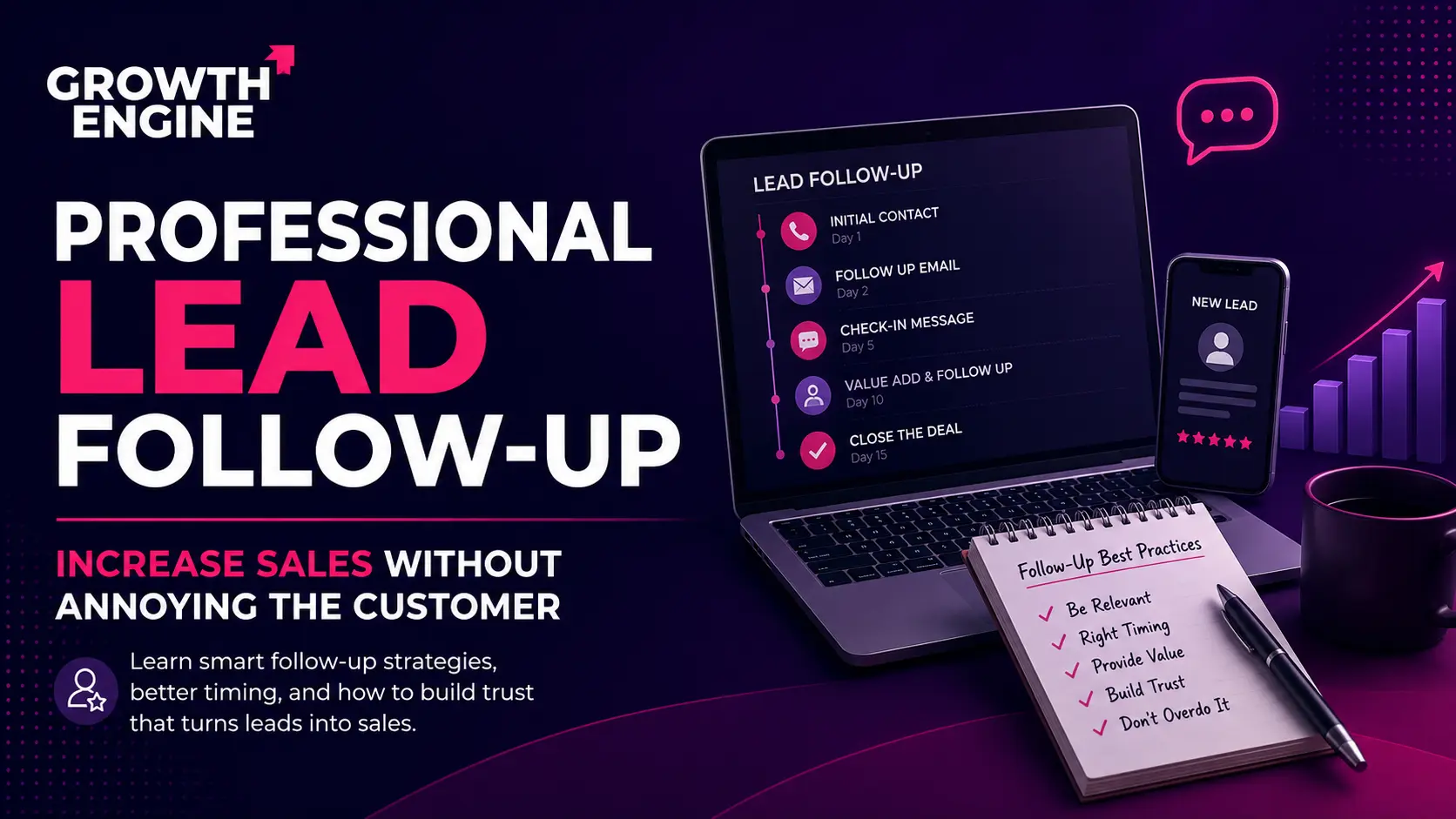
A practical timeline might look like this:
- Day 1: Thank-you email and meeting summary.
- Day 3: Share a useful resource.
- Week 1: Address questions or objections.
- Week 2: Send a relevant customer success story.
- Ongoing: Reach out only when you have meaningful value to add.
Remember:
Your goal isn’t more follow-ups.
Your goal is more valuable follow-ups.
Handling Customer Objections During Follow-Up
An objection is rarely a rejection.
Most objections simply indicate that the buyer needs more confidence before making a decision.
Common concerns include:
- Budget limitations.
- Timing.
- Implementation complexity.
- Comparing multiple vendors.
Instead of trying to overcome objections immediately, ask thoughtful questions that help uncover the real concern.
Once you understand what’s holding the customer back, you can provide the information that matters most.
Professionals who want to improve this skill can benefit from Growth Engine’s The Art of Selling and Persuading Customers Without Pressure training, which focuses on ethical influence, objection handling, and trust-based selling techniques.
Why CRM Is Essential for Customer Follow-Up
Managing dozens—or even hundreds—of prospects manually quickly becomes overwhelming.
That’s why high-performing sales organizations rely on CRM systems to organize every stage of the sales process.
A CRM helps you:
- Track every interaction.
- Schedule follow-up activities.
- Monitor deal progress.
- Identify high-priority opportunities.
- Improve team collaboration.
- Measure sales performance.
However, technology alone isn’t enough.
A CRM is only effective when supported by a structured sales process.
Growth Engine’s Sales Management Mastery Training teaches sales leaders how to build scalable sales systems, manage pipelines effectively, and use performance metrics to improve revenue growth.
Metrics That Measure Follow-Up Success
If you want continuous improvement, you need to measure more than the number of emails you send.
Key performance indicators include:
- Email response rate.
- Prospect-to-opportunity conversion rate.
- Opportunity-to-close rate.
- Average sales cycle length.
- Number of follow-up touchpoints before closing.
- Customer retention rate.
Tracking these metrics allows sales teams to identify weaknesses and optimize their follow-up strategy over time.
Professional Tips That Increase Closing Rates
The highest-performing sales professionals follow several consistent habits.
They:
- Personalize every follow-up.
- Reference previous conversations.
- Educate before selling.
- Respect the buyer’s timeline.
- Focus on solving business problems.
- Build trust before asking for commitment.
- Continue providing value throughout the buying journey.
These habits create stronger customer relationships and naturally improve sales performance.
Conclusion
Professional customer follow-up is far more than sending reminder emails or checking whether a prospect has made a decision. It is a strategic process that builds trust, addresses uncertainty, and helps buyers move confidently through every stage of the purchasing journey.
When every interaction delivers meaningful value, customers begin to view you as a trusted advisor rather than simply another salesperson. That shift in perception often makes the difference between losing an opportunity and building a long-term business relationship.
At Growth Engine, we help sales professionals and organizations develop modern selling skills that improve customer engagement, strengthen follow-up strategies, and increase closing rates. If you work in the real estate industry, our Real Estate Sales Mastery Training provides specialized frameworks for managing long sales cycles, nurturing qualified prospects, and converting more opportunities into successful transactions.
Frequently Asked Questions
How do you follow up with prospective customers without being pushy?
Focus on providing value in every interaction instead of repeatedly asking for a decision. Share useful insights, answer questions, and help prospects move through their buying journey at their own pace.
How often should I follow up with a prospect?
There’s no universal rule, but every follow-up should have a clear purpose. Reach out when you have new information, valuable resources, or relevant updates to share.
What’s the best way to follow up with customers?
The best method depends on the customer’s preferences and your sales process. Email, phone calls, LinkedIn, and messaging platforms can all be effective when used appropriately.
Why do prospects stop responding?
Prospects may stop responding because follow-up messages lack value, arrive at the wrong time, or focus too heavily on closing the sale instead of helping solve a problem.
Does customer follow-up increase sales?
Yes. Consistent, value-driven follow-up builds trust, addresses objections, and significantly improves conversion rates throughout the sales process.
How should I handle a prospect who has gone silent?
Wait an appropriate amount of time before reaching out with something genuinely helpful, such as a relevant article, case study, or industry insight, instead of simply asking for an update.
Why is CRM important for customer follow-up?
A CRM helps sales teams organize customer information, schedule follow-ups, monitor opportunities, and improve overall sales performance through better visibility and automation.
What’s the difference between professional follow-up and being pushy?
Professional follow-up focuses on helping customers make informed decisions, while pushy sales tactics prioritize closing the deal regardless of the customer’s readiness.
Which metrics should I track to improve follow-up performance?
Important metrics include response rates, conversion rates, sales cycle length, close rates, customer retention, and the average number of touchpoints required to close a deal.
How can I improve my customer follow-up skills?
Practice consultative selling, strengthen your communication skills, learn objection-handling techniques, and continuously refine your follow-up process through professional sales training and real-world experience.