
Currently Empty: EGP0.00
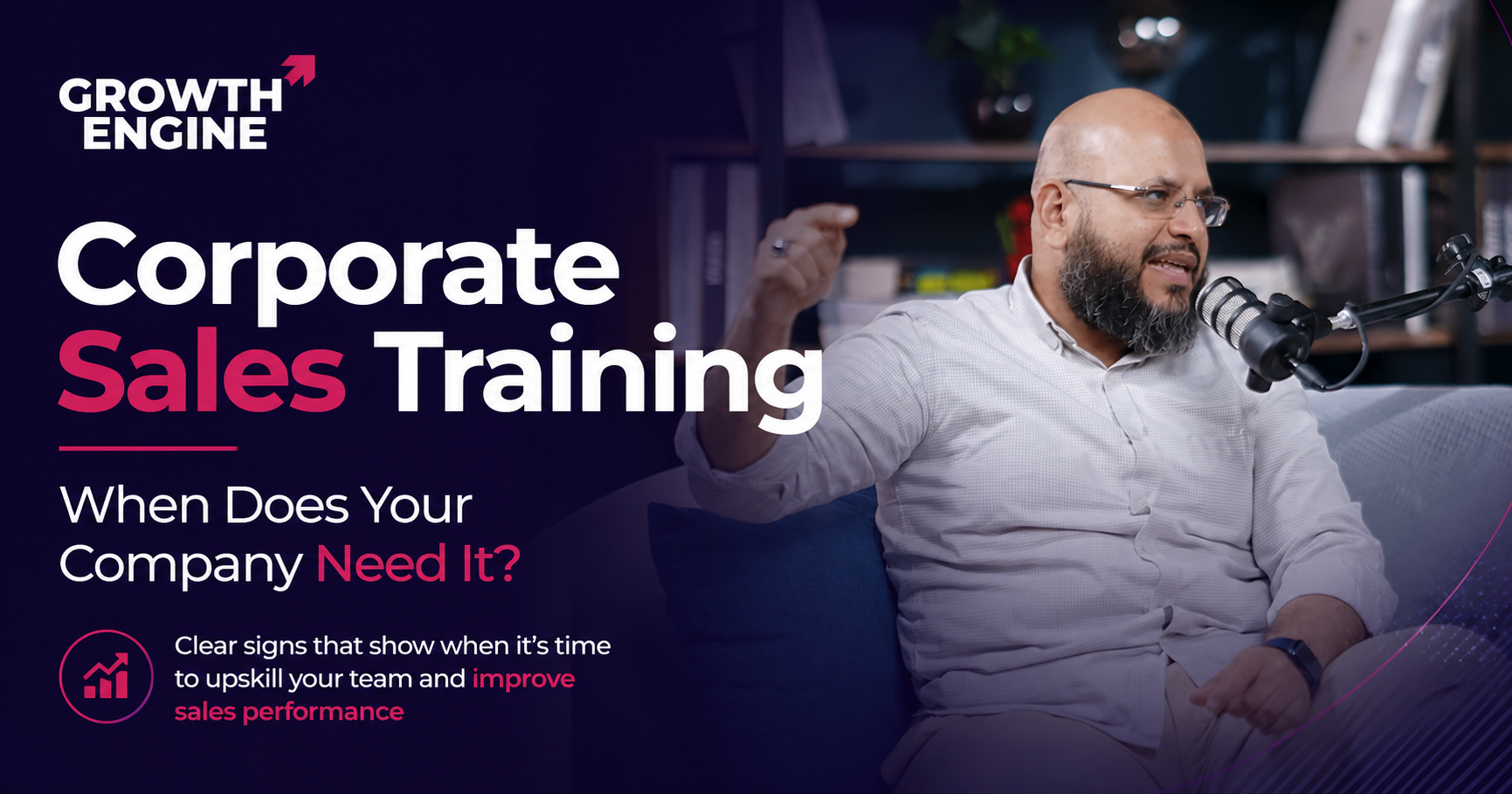
Corporate sales training is no longer a luxury or an optional activity that companies do from time to time. It has become an essential part of building a sales team that can compete, communicate professionally, and achieve consistent results. A company may have a strong product or a valuable service, yet still fail to reach its expected sales targets because the sales team lacks the right skills, a unified selling approach, or the ability to turn opportunities into real deals.
In many cases, the problem is not only the market, the price, or the product. The real issue may be the way the product or service is being sold. Does your sales team know how to start a conversation with a customer? Can they understand the customer’s real needs? Can they present value clearly? Can they handle objections with confidence? Do they know when and how to close a deal? These questions reveal whether your company needs corporate sales training.
In this article, you will learn what corporate sales training means, when your company needs sales team training, what signs indicate a sales performance problem, and how training can help your team improve results and become more professional.
What Is Corporate Sales Training?
Corporate sales training is a training program designed to help sales teams inside companies improve their selling skills and the way they deal with customers. This type of training is different from individual sales courses because it focuses on the company’s actual needs, products or services, customer behavior, sales process, and the daily challenges faced by the sales team.
The goal of corporate sales training is not only to teach salespeople a few sales phrases or persuasion techniques. The goal is to build a more organized and professional selling approach. Effective training helps the team understand customers, ask the right questions, present value, handle objections, follow up intelligently, and close deals in the right way.
Corporate sales training also helps management create a unified sales approach across the team. Instead of every salesperson working in a completely different way, the team follows a clearer sales framework. This makes performance easier to measure, manage, and improve.
Why Do Companies Need Sales Training?
Companies need sales training because they operate in a competitive environment that changes constantly. Customers are more informed, competitors are more active, and information is available everywhere. Selling is no longer about simply explaining a product or offering a discount. It requires a deeper understanding of the customer and how they make buying decisions.
The sales team is the direct connection between the company and the customer. Any weakness in communication, presentation, follow-up, objection handling, or negotiation can lead to lost opportunities. That is why sales team training should be seen as a direct investment in revenue improvement, not just a training expense.
When a sales team receives practical training, they become more confident when dealing with customers, more aware of the value of the product or service, and more organized in managing sales opportunities. This can improve conversion rates, average deal value, customer experience, and overall sales performance.
When Does Your Company Need Corporate Sales Training?
A company should not wait until sales results collapse before training the sales team. There are clear signs that show when a company needs a training program to improve sales performance. Below are the most important signs.
1. When the Sales Team Is Not Achieving Targets
If your sales team repeatedly fails to achieve sales targets, this is a strong sign that something needs to be analyzed. The issue may be related to the number of leads, lead quality, sales skills, follow-up, objection handling, or the team’s ability to close deals.
Corporate sales training helps diagnose this problem and develop the required skills. Instead of simply putting more pressure on the team to reach the numbers, training helps identify the real reasons behind weak results and provides practical solutions.
The training process may reveal that the team needs to improve how they ask questions, present value, handle objections, or follow up with customers. Once these skills are developed, achieving targets becomes more realistic.
2. When the Conversion Rate Is Low
Your sales team may receive a good number of leads, but only a small percentage of those leads become actual customers. In this case, the problem may not be only in marketing or lead generation. The problem may be in the way sales opportunities are handled.
A low conversion rate means that one or more stages of the sales process are not working properly. Maybe leads are not being qualified correctly. Maybe the salesperson does not understand the customer’s needs. Maybe the offer is not presented in a compelling way. Or maybe the team is not handling objections professionally.
Through sales team training, every stage of the sales process can be improved. Training helps salespeople understand customer needs, qualify opportunities, present the right solution, and guide the conversation toward a clear decision.
3. When the Team Loses Deals Because of Price
If your sales team loses many deals because customers say the price is too high, the real problem may not be the price itself. It may be the way the team presents value. Customers often object to price when they do not clearly understand what they will receive in return.
Sales training helps the team move from selling price to selling value. Instead of only explaining product features, salespeople learn how to connect the product or service to the customer’s real needs and explain the benefit or result the customer will get.
When the customer understands the value, price becomes part of the decision rather than the only obstacle. This does not mean ignoring price. It means presenting it in a context that helps the customer understand the return they can expect.
4. When the Team Struggles With Customer Objections
Customer objections are a normal part of any sales process. A customer may object to price, timing, trust, comparison with competitors, actual need, or decision-making authority. The problem is not the existence of objections. The problem is how the salesperson handles them.
If your team becomes stressed when they hear an objection, responds defensively, or loses the customer after the first objection, this is a clear sign that your company needs sales training. A professional salesperson treats objections as an opportunity to understand the customer better, not as the end of the sale.
Corporate sales training helps the team understand the real reason behind the objection, use the right questions, and respond in a way that builds trust and explains value instead of arguing with the customer.
5. When Every Salesperson Works in a Different Way
One important sign that a company needs sales training is when every salesperson works in a completely different way. One person focuses only on price. Another explains the product in too much detail. A third depends only on personal relationships. Another does not follow up with customers in an organized way.
This inconsistency makes sales performance unstable and makes it difficult for management to understand what works and what does not. It also creates an inconsistent customer experience, which may affect the company’s image and professionalism.
Training helps build a unified sales framework inside the company. This does not mean that every salesperson loses their personality. It means that the team follows clear steps and shared standards that help everyone sell more professionally.
6. When Follow-Up With Customers Is Weak
Many deals are not lost because the customer rejected the offer. They are lost because of weak follow-up. A customer may need time to think, compare options, or discuss the decision with someone else. If the salesperson does not follow up in an organized way, the customer may go to a competitor.
Weak follow-up appears in delayed responses, forgotten customers, lack of a clear follow-up system, or follow-up messages that feel annoying or pushy. All these mistakes can reduce the chances of closing the deal.
Sales team training helps salespeople understand when to follow up, how to send the right follow-up message, and what value to add in every interaction so the customer does not feel pressured.
7. When the Company Is Expanding Its Sales Team
If your company is preparing to hire new salespeople or expand the sales team, training becomes essential. A clear training program helps new employees understand the product, customer type, sales process, and company message faster.
Without training, new salespeople learn through trial and error. This can lead to lost opportunities during the first period of employment. Good training shortens the onboarding period and prepares the team to deal with customers more confidently.
Training also ensures that new employees follow the company’s selling approach instead of bringing methods from previous companies that may not fit your current product, market, or customer.
8. When the Company Launches a New Product or Service
Launching a new product or service requires clear training for the sales team. It is not enough for salespeople to know the technical features of the product. They must understand who the right customer is, what problem the product solves, how to present its value, and what objections are expected.
In many cases, a new product fails in the market not because it is weak, but because the sales team does not know how to explain it properly or connect it to customer needs. That is why practical sales training should take place before or during the launch.
Sales training at this stage helps unify the sales message, prepare objection-handling scenarios, and equip the team to answer customer questions with confidence.
What Should Corporate Sales Training Include?
Corporate sales training should be practical and connected to the challenges faced by the team. It should not be just general content about selling. An effective program should include core areas that help the team improve performance.
- Understanding customers and how they make buying decisions.
- Identifying the right customer and qualifying sales opportunities.
- Asking questions that uncover real needs.
- Presenting the value of the product or service convincingly.
- Handling customer objections professionally.
- Negotiating without losing the value of the offer.
- Following up effectively with potential customers.
- Closing deals at the right time.
- Organizing daily sales activities.
- Improving the customer experience during the sales process.
What Is the Difference Between Individual Sales Training and Corporate Sales Training?
Individual sales training helps one person improve their own sales skills, but it is usually not connected to a specific company’s sales system or team challenges. Corporate sales training, on the other hand, is designed based on the company’s needs, market, team level, and management goals.
In corporate training, real examples from the company’s business can be used. These may include actual customer objections, daily sales scenarios, and performance problems that already exist inside the team. This makes the training more effective because it is close to the team’s real work.
Corporate training also helps unify the sales language inside the team, improve coordination between management and salespeople, and connect training to performance indicators that can be tracked after the program ends.
How Can You Measure the Success of Sales Team Training?
The success of sales training should not be measured only by how participants feel after the session. It should be measured by the effect on behavior and results. That is why it is important to define clear indicators before and after training.
Training success can be measured by tracking conversion rate, number of meetings, quality of proposals, follow-up speed, closing rate, average deal value, and the number of objections handled successfully.
The manager can also review team performance after training through calls, meetings, CRM reports, or customer feedback. The goal is to know whether the sales behavior actually changed and whether this change was reflected in results.
How Do You Choose the Right Sales Training Program for Your Company?
When choosing a corporate sales training program, do not look only for an attractive title or a generic training offer. Look for a program that understands the nature of your team, starts with analyzing company needs, and then provides practical content that fits real challenges.
The right program should focus on application, not theory only. It is better for the training to include exercises, market examples, role-playing, discussion of real objections, and a clear plan for applying what the team learns after the training.
The training should also fit the market in which the company operates. Selling services is different from selling products. Real estate sales are different from corporate sales. Phone selling is different from face-to-face meetings. That is why every company needs training that fits its real situation.
How Can Growth Engine Academy Help You?
Growth Engine Academy provides practical sales training programs in Arabic that help companies develop their sales teams, improve communication with customers, handle objections, and increase the chances of closing deals. The focus is on practical application and connecting training to market challenges and team needs.
If your company needs to develop its sales team, you can explore the available sales courses from Growth Engine Academy, or visit the Book a Course page to request a suitable program. You can also contact us through the Contact Us page to find the best training option for your team.
Conclusion
Your company needs corporate sales training when signs appear such as weak target achievement, low conversion rates, losing deals because of price, poor objection handling, lack of a unified sales approach, or weak customer follow-up.
Corporate sales training helps turn the sales team from a group of individuals working in different ways into a more organized and professional team. With practical training and the right follow-up, the company can improve performance, increase closing opportunities, and build a better customer experience.
Frequently Asked Questions About Corporate Sales Training
1. What is corporate sales training?
Corporate sales training is a customized training program that develops the selling skills of company sales teams, including customer understanding, value presentation, objection handling, follow-up, negotiation, and closing deals professionally.
2. When does a company need sales training?
A company needs sales training when it struggles to achieve targets, has low conversion rates, loses many deals, has weak follow-up, lacks a unified selling method, or finds it difficult to handle customer objections effectively.
3. Is sales training suitable for small companies?
Yes, sales training is suitable for small companies because it helps them build an organized selling approach from the beginning, develop team skills, reduce lost opportunities, and improve their chances of growth in the market.
4. What is the difference between an individual sales course and corporate sales training?
An individual sales course develops the skills of one person. Corporate sales training focuses on the entire team and is designed according to the company’s products, customers, sales process, and real business challenges.
5. Can sales team training increase sales?
Yes, sales team training can help increase sales by improving communication skills, customer understanding, value presentation, objection handling, follow-up organization, and the team’s ability to close deals.
6. What are the most important skills to train a sales team on?
The most important skills include understanding customer needs, asking the right questions, presenting value, handling objections, negotiation, follow-up, time management, and closing the sale at the right time.
7. How can the success of sales training be measured?
The success of sales training can be measured through indicators such as conversion rate, closing rate, number of meetings, quality of proposals, follow-up speed, average deal value, and improved team behavior with customers.
8. Can sales training be customized according to the company’s industry?
Yes, sales training can be customized according to the company’s industry, customer type, product, or service. Customized training is more effective because it addresses real situations and objections the team faces in daily work.