Currently Empty: EGP0.00
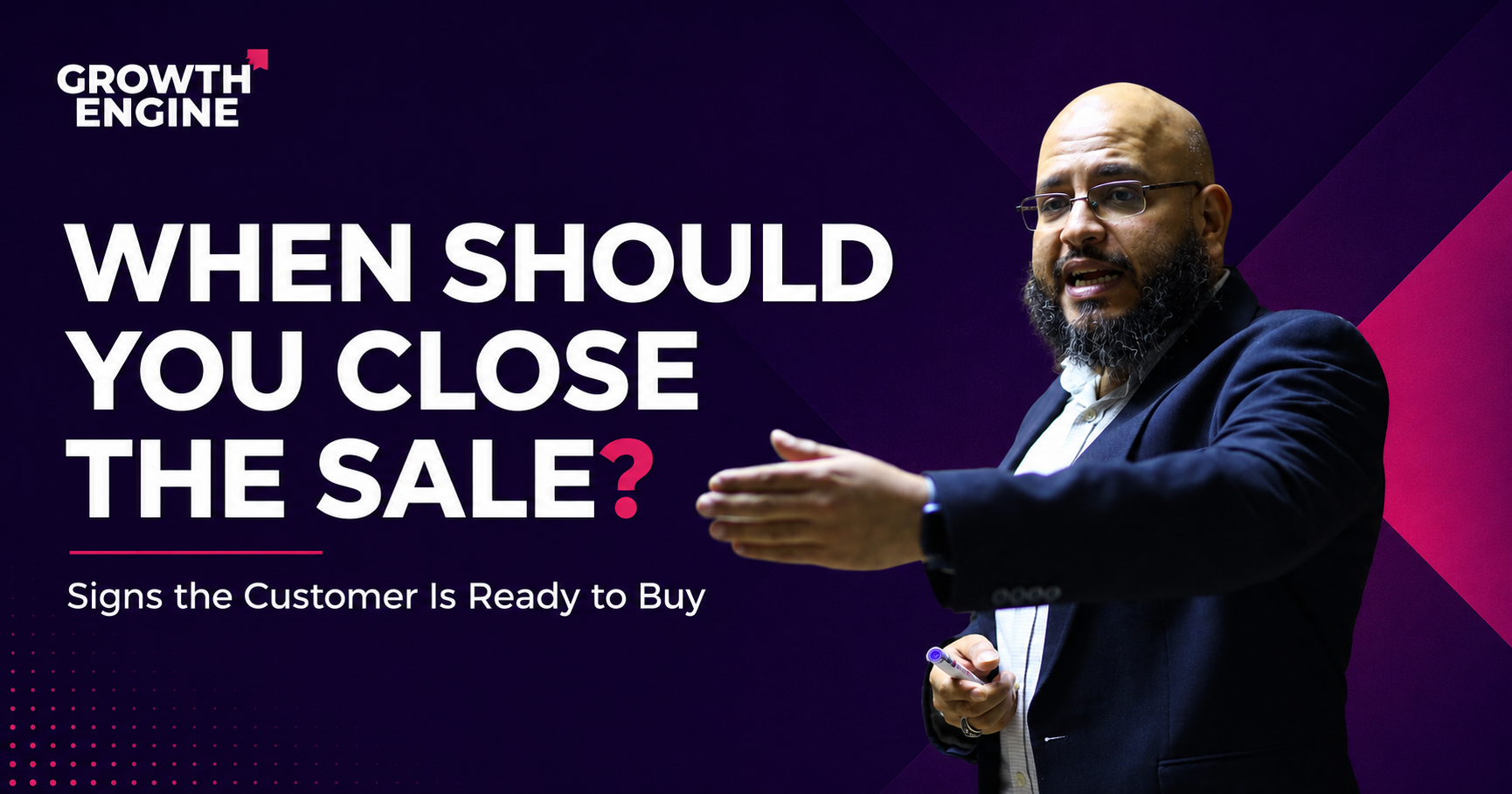
What does closing a sale mean?
Closing a sale means turning the customer’s agreement with the value into a clear commitment to an action. That action may be signing a contract, paying a deposit, issuing a purchase order, selecting a package, or confirming a start date. In a complex sale, a stage close may secure a stakeholder meeting, product trial, or technical approval before the final commercial commitment.
Closing is not a magic sentence added to the end of a pitch. It is the outcome of customer discovery, opportunity qualification, relevant value presentation, and risk resolution. A closing technique cannot compensate for weak work in those earlier stages.
When is a customer ready to buy? Use a readiness test
A customer is ready when six areas are sufficiently clear: need, fit, priority, authority, risk, and next step. Check them before asking for commitment:
- Need: The customer has an important problem to solve or outcome to achieve.
- Fit: The buyer understands how the offer addresses that need, not only what features it includes.
- Priority: There is a realistic reason to act now or by a defined date.
- Authority: The decision-maker and other influential stakeholders are known.
- Risk: Major concerns involving price, trust, implementation, or change have been discussed.
- Next step: The customer is willing to agree to an action with an owner and date.
If an essential part is missing, do not increase pressure. Discover what is incomplete. The customer may love the solution but lack approval authority, or have a budget without a business priority that justifies acting now.
Nine signs the customer is ready to buy
1. The questions shift from features to implementation
When the customer moves from “What does it do?” to “How would we start?”, they are imagining the solution in use. Questions about delivery, onboarding, training, setup requirements, responsibilities, or timing show a shift from general evaluation to practical planning.
Test the signal: “If the starting date works, is there anything else you would need to resolve before we define the next step?”
2. The customer discusses price and payment terms specifically
A specific payment question is more meaningful than a general request for price. When the customer asks about the first payment, installments, quote validity, or exactly what the price includes, they may be testing whether the decision can be implemented.
Do not assume every negotiation means readiness. Ask: “If we agree on a workable payment structure, would anything else prevent us from moving forward?” A new issue means price was not the only barrier.
3. The buyer compares two options within your offer
Comparing two packages, dates, or delivery models often means the customer has moved from questioning the idea to choosing how to proceed. Do not repeat every feature. Connect the choice to the buyer’s priorities: “Based on your team size and desired start date, which option is closer to what you need?”
4. The customer uses ownership or future language
Listen for phrases such as “when we start,” “our team will need,” “could we add…?” or “how would this work for us?” This language indicates that the customer has begun placing the solution inside their own situation. Continue exploring that scenario, then summarize what has been agreed.
5. The buyer asks for proof that reduces a specific risk
A request for a case study, reference, trial, guarantee, or support detail may be the buyer’s last test before a decision. The meaningful signal is not the request alone, but the risk attached to it. The customer might say, “I need to know the team will adopt the system,” or “Have you worked with a company of our size?”
Provide the relevant evidence and ask: “Does that address the risk you raised, or is there another part you would like to examine?”
6. A decision-maker or influential stakeholder joins
Inviting a manager, partner, technical lead, or procurement representative may show that the opportunity is entering the approval process. It is not necessarily the final close. Understand each person’s role, criteria, and required evidence.
In business-to-business sales, an enthusiastic champion is helpful but insufficient when they cannot explain the buying process or connect you with the people who approve the decision.
7. The customer restates the value in their own words
Statements such as “so this would reduce our follow-up time” or “this could improve conversion” show that the customer has connected the offer to an outcome they care about. That is stronger than agreeing with a generic benefit in your presentation. Confirm the interpretation and ask which step would turn the expected outcome into implementation.
8. Objections settle and the customer accepts the answer
After handling the customer’s objection, check whether they confirm that the issue is resolved or simply move to another concern. A real objection followed by resolution and willingness to advance is a buying signal; silence is not.
Ask: “Is that issue now clear enough to move toward a decision, or is there another part we should address?”
9. The customer asks directly about the next step
Questions such as “What do you need from me?”, “How do we begin?” or “When will the contract arrive?” are among the clearest signs of readiness. Do not restart the presentation or introduce unnecessary features. Explain the action, owner, date, document, or payment required.
Quick reference: signal, possible meaning, and safe question
| Customer signal | Possible meaning | Safe test question |
|---|---|---|
| Asks about start date | Imagining implementation | “Would you like to review the starting steps now?” |
| Discusses payment | Testing financial feasibility | “If the terms work, would another barrier remain?” |
| Compares two packages | Choosing rather than rejecting | “Which option fits your priority better?” |
| Requests a final proposal | Starting the approval path | “Who will approve it, and by what date?” |
What is the difference between a buying signal and politeness?
A buying signal produces information or a verifiable commitment; politeness remains general. “This looks excellent” is not a purchase decision. “This fits our need; please send the contract to procurement today” includes evaluation, action, owner, and timing.
Do not rely on enthusiasm or body language alone. Combine two or more signals and test them with a question. A customer may smile and agree because they are courteous. Another may appear reserved while being ready to purchase. Words and actions tied to the decision process are more dependable than one gesture.
How do you use a trial close without pressure?
A trial close is a short question that measures readiness without assuming the decision has been made. A positive answer allows you to define the next step. A concern tells you where to return.
- “If we resolve the implementation timeline, would you be ready to start?”
- “Which option fits the size of your team better?”
- “Do you see the solution producing the outcome we agreed on?”
- “Should we review the contract, or do you first need a meeting with the decision-maker?”
- “What would you need to resolve before approving the decision?”
These questions give the customer room to identify missing information. Avoid an assumption such as “We will start Monday, then” before the buyer has agreed on the essential elements.
Four ways to close based on the situation
The summary close
Summarize the need, outcome, scope, and resolved concerns before requesting action. It suits a deal with multiple details: “We agreed on training 20 people, starting in September, and measuring performance before and after the program. Shall we send the contract for approval?”
The option close
Offer two genuinely suitable choices: “Would the intensive program work better, or should we divide it across four weeks?” Do not use an option close if the customer has not agreed with the purchase itself.
The next-step close
In a longer sale, request a stage commitment such as a technical meeting, trial, or contract review. It maintains progress without pretending the deal is already final.
The implementation close
When approval is clear, organize execution: “To begin on the agreed date, we need approval and billing details by Thursday. Who will own each step?”
When should you not try to close the deal?
Do not ask for the purchase while fit, value, authority, or a major risk remains unclear. Return to discovery when:
- The customer cannot define the problem or does not consider it a priority.
- The offer does not match the essential need.
- A material objection has not been understood or resolved.
- Your contact lacks authority and cannot explain the decision process.
- The customer is confused about scope or terms.
- The sale would require a promise you cannot make or an outcome you cannot guarantee.
Walking away from a poor-fit opportunity is better than closing a deal that produces cancellation or dissatisfaction. Professional selling protects both parties.
Why does closing too early or too late fail?
Closing too early turns missing information into resistance. Closing too late wastes momentum and can confuse the customer. If you request commitment before understanding the need and decision process, the buyer may feel that you care more about completing the sale than helping them. If you continue presenting after the buyer is ready, you may introduce unnecessary information and create new concerns.
Once two strong signals appear and the fundamentals are clear, test readiness. When the customer says yes, stop selling and document the agreement.
How do you close through WhatsApp or follow-up?
Send a concise summary of the agreement, value tied to the customer’s need, next action, owner, and date. For example:
Mohamed, based on our conversation, the priority is to train the team on customer discovery and objection handling before the end of the quarter. The proposed program includes three sessions and practical application. I will send the final proposal today, and we will review approval Tuesday at 11:00. Does that time work?
Do not repeatedly send “just following up.” Every follow-up should have a reason: a document, answer, decision, or appointment. If the customer’s priority changes, update the opportunity instead of keeping it in the forecast without evidence.
What should you do after the customer says yes?
Confirm the agreement before celebrating the deal. Review scope, price, payment terms, responsibilities, timeline, start date, and success measure. Record who will do what and when, then send a written summary.
Many deals are not lost before “yes” but after it, when unclear actions create delay. Make the transition from selling to delivery smooth so that the customer’s experience begins with the same confidence that supported the decision.
How should a sales manager coach closing skills?
Coach the team to diagnose readiness rather than memorize aggressive phrases. Review calls and opportunities by asking: What is the need? Which buying signal appeared? Who decides? Which objection remains open? What is the next commitment?
Track proposal-to-win conversion, no-decision rate, time spent in the final stage, loss reasons, and forecast accuracy. When a team requests the order repeatedly but opportunities do not progress, the weakness may be qualification or discovery. When buyers appear ready but conversations end without an action, the team may need to make clearer requests and create specific next steps.
The Modern Selling Skills course helps salespeople connect customer discovery, value presentation, objection handling, and sales closing instead of treating closing as an isolated trick.
Final recommendation: close when the decision becomes clear
The right time to close is when the customer understands the need and value, major risks have been addressed, the decision process is known, and a next step can be defined. Look for more than one buying signal and use a trial question. If the buyer is ready, agree on an action, date, and owner. If not, discover what is missing instead of adding pressure.
To develop customer discovery, value presentation, objection handling, and closing skills, explore Growth Engine Academy’s sales training courses and choose the program that fits your role or team.
Frequently asked questions about closing a sale
When is the best time to ask for the sale?
Ask after the need and value are clear, major objections are resolved, the decision-maker is known, and the customer shows willingness to take a specific step. Test readiness before asking for final commitment.
Does asking about price mean a customer is ready to buy?
Not always. The customer may be researching or comparing offers. It becomes a stronger signal when they discuss payment terms or scope and connect them to an implementation date or action.
What are the strongest buying signals?
Questions about implementation or contracts, specific payment discussions, involving the decision-maker, comparing defined options, using future language, and asking for the next step are strong signals.
What is a trial close?
A trial close measures readiness without assuming agreement, such as: “If we resolve the implementation timing, would you be ready to begin?” It reveals whether another issue blocks progress.
How can I close without pressuring the customer?
Summarize the agreement, connect the solution to the need, and request a clear action while allowing room for concerns. Avoid false urgency and never imply that the buyer agreed before they did.
What should I do if an objection appears during closing?
Pause the request, clarify the objection, address it with relevant evidence or adjustment, and confirm that the issue is resolved before returning to the next step.
Should every sales opportunity be closed?
No. If the solution is a poor fit, there is no priority, or the customer cannot complete a realistic decision process, defer or disqualify the opportunity instead of creating a bad deal.
What should be confirmed after the customer agrees?
Confirm scope, price, payment, responsibilities, timeline, start date, and success measure. Then send a written summary showing the next action and the owner on each side.