Currently Empty: EGP0.00
Steps of a Sales Visit: From First Meeting to Closing the Opportunity Successfully
August 10, 2026

A successful sales visit follows seven connected stages: preparation, trust building, needs discovery, solution presentation, objection handling, closing, and follow-up. Results depend less on talking more and more on asking useful questions, clarifying value, and agreeing on a next step.
A successful sales visit is one of the most important moments in the sales process because it transforms a potential opportunity into a real conversation with the customer. However, many sales professionals make the mistake of focusing only on presenting their product instead of understanding the customer, building trust, and identifying the real buying motivation.
Understanding the steps of a sales visit helps sales professionals create more productive conversations, discover customer needs, and increase the chances of closing successful deals.
A professional sales visit is not based on luck or simply having strong communication skills. It requires preparation, a clear structure, effective questioning techniques, and the ability to guide the customer through the buying journey.
At Growth Engine, we believe successful selling is a skill that can be developed through practical training, modern sales frameworks, and a deep understanding of customer psychology. Sales methodologies such as SPIN Selling help professionals ask better questions, uncover challenges, and create stronger value during customer conversations.
In this guide, you will learn the complete process of a sales visit, from preparation before the meeting to building trust, presenting solutions, handling objections, and closing the opportunity professionally.
What Is a Sales Visit?
A sales visit is a direct meeting between a sales professional and a customer with the goal of understanding needs, presenting solutions, and moving the sales opportunity forward.
A sales visit is not simply a product presentation. It is a strategic conversation designed to:
- Understand customer challenges.
- Discover business needs.
- Present relevant solutions.
- Build customer confidence.
- Create the next step in the sales process.
Modern sales has moved away from traditional selling methods that focus only on product features. Today, customers expect sales professionals to understand their situation and provide solutions that create measurable value.
A successful sales representative acts as a consultant who helps customers make better decisions.
Step 1: Preparing Before the Sales Visit
The first stage of the steps of a sales visit begins before meeting the customer.
Strong preparation allows sales professionals to enter conversations with confidence and create a more personalized experience.
Research the Customer
Before the meeting, a salesperson should collect information about:
- The customer’s business.
- Current challenges.
- Existing solutions.
- Market position.
- Decision-makers involved.
This research helps avoid generic conversations and allows the salesperson to focus on what matters to the customer.
Define the Goal of the Meeting
Every sales visit should have a clear objective.
Possible goals include:
- Understanding customer needs.
- Qualifying an opportunity.
- Presenting a solution.
- Moving toward negotiation.
- Scheduling the next step.
- Closing the deal.
Without a clear goal, meetings can become simple conversations without measurable progress.
Prepare Effective Sales Questions
Questions are among the most powerful tools in sales.
Instead of spending most of the meeting explaining a product, successful sales professionals use questions to understand the customer’s situation.
Good sales questions help uncover:
- Current problems.
- Business goals.
- Buying motivations.
- Decision-making factors.
Step 2: Starting the Meeting and Building Trust
The first few minutes of a sales visit strongly influence the entire conversation.
Customers are more likely to engage when they feel respected, understood, and comfortable.
Creating a Positive First Impression
A professional beginning includes:
- Arriving on time.
- Showing confidence and professionalism.
- Creating a friendly atmosphere.
- Showing interest in the customer.
- Avoiding immediate product promotion.
The goal at the beginning is not to sell. The goal is to create trust.
Building Customer Trust From the First Interaction
Trust is the foundation of successful sales relationships.
Customers want to feel that the salesperson understands their needs and is interested in helping them, not only making a transaction.
Developing this ability requires understanding customer psychology and communication techniques. Learning more about How to Build Customer Trust From the First Interaction can help sales professionals create stronger relationships from the beginning of the sales journey.
Step 3: Discovering Customer Needs Using SPIN Selling
One of the most effective sales methodologies for managing customer conversations is SPIN Selling.
This approach helps sales professionals move from product-focused discussions to customer-focused conversations.
SPIN Selling includes four types of questions:
1. Situation Questions
These questions help understand the customer’s current situation.
Examples:
- How are you currently managing this process?
- What tools or systems are you using today?
- How does your current workflow operate?
The purpose is to gather background information.
2. Problem Questions
Problem questions identify customer challenges.
Examples:
- What difficulties are you experiencing currently?
- What areas would you like to improve?
- What prevents you from achieving better results?
These questions reveal the customer’s real needs.
3. Implication Questions
Implication questions help customers understand the impact of their problems.
Examples:
- How does this challenge affect your results?
- What happens if this issue continues?
- How does this problem influence your costs or productivity?
These questions increase awareness of the importance of finding a solution.
4. Need-Payoff Questions
These questions help customers recognize the value of solving their problems.
Examples:
- What would improve if this challenge was solved?
- How would this solution help your team?
- What results would you like to achieve?
This stage helps customers connect the solution with their goals.
Step 4: Presenting the Solution Effectively
After discovering the customer’s needs, the next stage of the sales visit is presenting the right solution.
A common mistake among sales professionals is focusing only on product features. Customers are rarely interested in features alone; they want to understand how a solution can improve their situation.
A strong sales presentation connects the solution directly to the customer’s challenges.
Instead of saying:
“Our platform includes advanced reporting features.”
A stronger approach would be:
“Our platform helps your team reduce manual work, organize customer information, and make faster decisions through accurate reporting.”
The second approach focuses on value rather than specifications.
A successful solution presentation should include:
- The customer’s current challenge.
- The impact of that challenge.
- The solution provided.
- The expected results.
- The next logical step.
Using Sales Skills During the Presentation
A successful sales visit depends heavily on applying the right sales skills at every stage of the conversation.
Personalizing the Conversation
Every customer has different goals, challenges, and priorities.
A professional salesperson adapts the conversation based on:
- Customer industry.
- Business size.
- Current problems.
- Expected outcomes.
- Buying process.
A personalized approach makes customers feel understood and increases engagement.
Focusing on Customer Value
Customers do not buy products simply because of features. They buy because they expect better results.
A salesperson should explain:
- How the solution saves time.
- How it improves efficiency.
- How it reduces problems.
- How it supports business goals.
Value-based selling creates stronger relationships and improves closing opportunities.
Using Examples and Stories
Examples help customers visualize the benefits of a solution.
A salesperson can use relevant customer success stories to demonstrate how similar businesses achieved better results.
However, examples should always be connected to the customer’s specific situation.
Step 5: Handling Customer Objections Without Losing the Opportunity
Objections are a normal part of every sales process.
A customer may raise concerns about:
- Price.
- Timing.
- Competition.
- Product suitability.
- Implementation.
Many inexperienced salespeople see objections as rejection. Professional salespeople understand that objections often indicate interest and a need for more information.
How to Handle Objections Professionally
Listen Before Responding
The first step is allowing the customer to fully explain their concern.
Interrupting too quickly may make the customer feel pressured.
Identify the Real Reason Behind the Objection
The first objection is not always the actual problem.
For example, when a customer says:
“The price is too high.”
The real concern may be:
“I am not convinced this solution provides enough value.”
Understanding the real reason allows the salesperson to provide a better response.
Respond With Value
The goal is not to argue with the customer.
The goal is to explain how the solution addresses their needs.
Sales professionals who want to improve this skill can explore How to Handle Customer Objections Without Losing the Deal, which focuses on practical objection-handling techniques and turning concerns into opportunities.
Step 6: Closing the Sales Opportunity
Closing is one of the most important stages in the sales visit process.
However, successful closing is not about pressuring customers. It is about recognizing when the customer is ready and helping them move forward.
Signs That a Customer Is Ready to Buy
Customers often show buying signals when they:
- Ask about pricing.
- Request additional details.
- Discuss implementation.
- Compare options.
- Ask about the next steps.
These signals indicate that the customer is moving closer to a decision.
Effective Closing Techniques
The Next-Step Close
Instead of asking:
“Do you want to buy?”
A professional salesperson can ask:
“What would be the best next step to move forward?”
This creates a smoother transition.
The Summary Close
The salesperson summarizes:
- The customer’s challenge.
- The agreed solution.
- The expected benefits.
This reminds the customer why the decision makes sense.
Step 7: Following Up After the Sales Visit
Many sales opportunities are lost because of weak follow-up.
A professional follow-up process should clearly define the next action.
Examples include:
- Sending a proposal.
- Sharing additional information.
- Scheduling another meeting.
- Starting contract discussions.
Consistent follow-up shows professionalism and keeps opportunities moving through the pipeline.
It also helps sales teams manage opportunities more effectively and avoid losing potential customers.
Improving Your Sales Visit Performance
Improving sales visit results requires continuous learning and performance analysis.
Successful sales professionals regularly review their conversations and identify improvement opportunities.
Invest in Professional Sales Training
Sales methods continue to evolve, and professionals need updated skills to remain competitive.
Programs such as Modern Sales Excellence Training help sales professionals develop practical frameworks for customer conversations, opportunity management, and improving closing performance.
Analyze Previous Meetings
After each sales visit, review:
- What questions worked well?
- Where did customer interest increase?
- What objections appeared?
- What could be improved next time?
This creates continuous improvement and stronger sales performance.
Develop Advanced Selling Skills
Modern sales requires more than basic communication.
Professionals need skills such as:
- Customer psychology.
- Negotiation.
- Consultative selling.
- Relationship management.
- Pipeline management.
Developing these skills helps salespeople create better conversations and stronger results.
Steps of a Real Estate Sales Visit
Real estate sales requires a special approach because customers are making important financial decisions.
A successful real estate sales visit requires:
- Understanding customer goals.
- Knowing market conditions.
- Identifying budget requirements.
- Presenting suitable options.
- Building long-term trust.
A real estate salesperson is not only selling a property; they are helping customers make a major investment decision.
Professionals interested in this field can explore How to Become a Successful Real Estate Salesperson to understand the skills and strategies required for success in real estate sales.
Why Sales Visits Are Critical for Business Growth
A successful sales visit combines preparation, communication, customer understanding, and strategic selling.
Salespeople who focus only on closing quickly may achieve short-term results, but professionals who build trust and provide value create long-term success.
Modern customers want advisors, not just sellers.
They want someone who understands their situation, identifies challenges, and provides the right solution.
At Growth Engine, we help sales professionals and organizations develop these capabilities through practical training programs focused on modern sales strategies, customer psychology, and measurable performance improvement.
The goal is not only to close more deals but to build a repeatable sales process that supports sustainable growth.
Related Guides for Practical Application
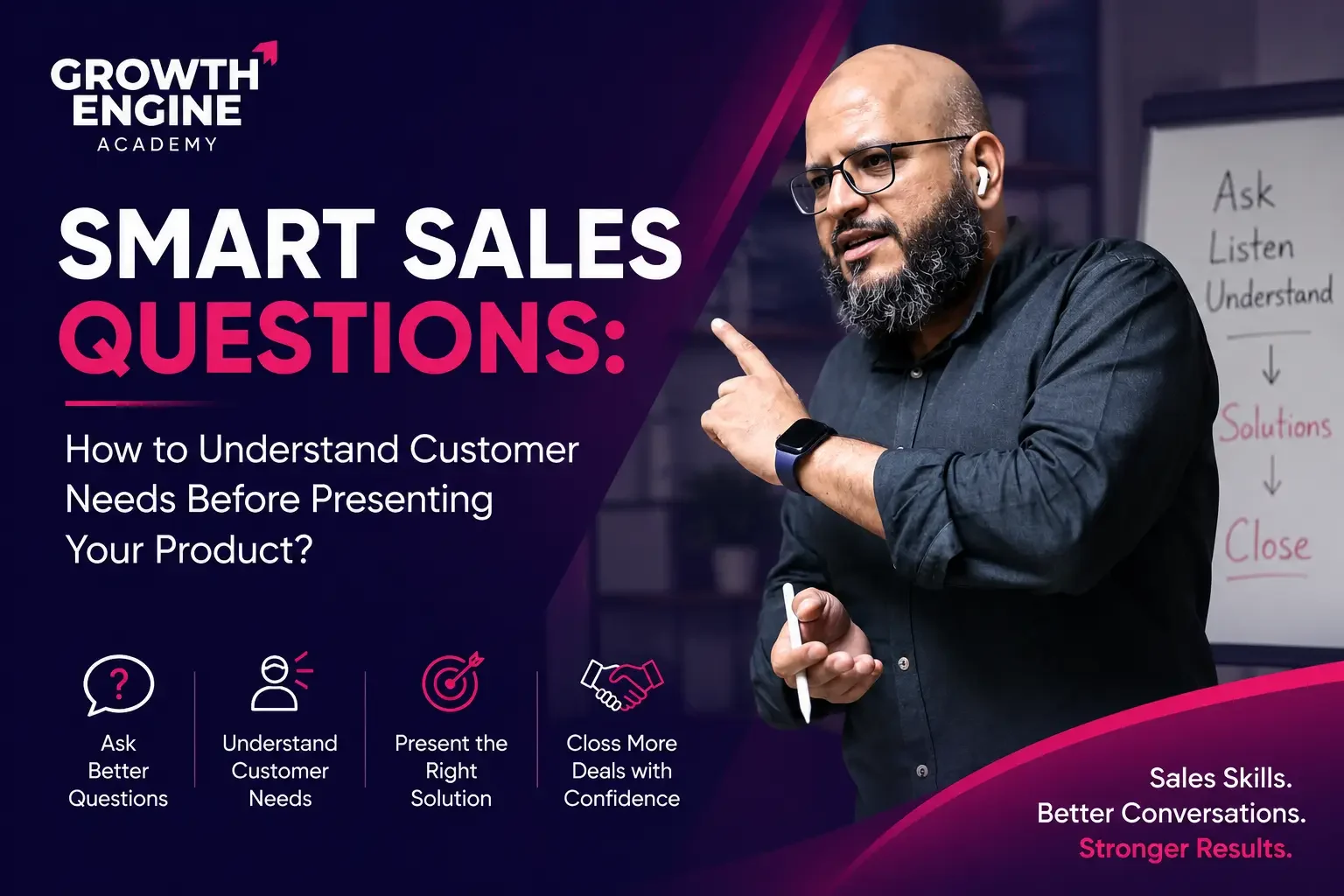
- Smart sales questions to understand customer needs
- How to handle customer objections
- Signs a customer is ready to buy
- Following up with prospective customers
- Modern Selling Professional course
- Essential sales skills
Recommended Video from Growth Engine Academy
Content Review and Experience
This article was reviewed by Growth Engine Academy’s sales training and consulting team. Since 2013, the academy has trained more than 9,500 professionals and worked with over 250 companies, so the recommendations emphasize practical application rather than theory alone.
Conclusion
Understanding the steps of a sales visit gives sales professionals a structured approach to creating better customer conversations and increasing closing opportunities.
A successful visit starts with preparation, continues with trust building and effective questioning using frameworks like SPIN Selling, and ends with solution presentation, objection handling, closing, and follow-up.
Modern selling is not about convincing customers to buy. It is about understanding their needs and creating real value.
With practical training from Growth Engine, sales professionals can develop the skills, strategies, and confidence needed to succeed in today’s competitive sales environment.
Frequently Asked Questions
1. What are the main steps of a sales visit?
The main steps include preparation, building trust, discovering customer needs, presenting solutions, handling objections, closing, and follow-up.
2. Why is preparation important before a sales visit?
Preparation helps sales professionals understand customers, create better conversations, and achieve clear meeting objectives.
3. What is SPIN Selling?
SPIN Selling is a sales methodology based on Situation, Problem, Implication, and Need-Payoff questions to discover customer needs.
4. What sales skills are important during a sales visit?
Important skills include communication, active listening, questioning, negotiation, and relationship building.
5. How should salespeople handle customer objections?
They should listen carefully, understand the real concern, and respond by explaining value rather than applying pressure.
6. When should a salesperson close a deal?
A salesperson should close when the customer shows buying signals such as asking about pricing, implementation, or next steps.
7. How does trust affect sales success?
Trust makes customers more comfortable sharing their needs and increases the likelihood of successful decisions.
8. Can sales visit skills be learned?
Yes. Sales visit skills can be improved through training, practice, feedback, and continuous learning.
9. What is the difference between traditional and modern selling?
Traditional selling focuses mainly on the product, while modern selling focuses on customer needs and creating value.
10. How can Growth Engine help improve sales performance?
Growth Engine provides practical sales training programs that help professionals improve communication, closing techniques, pipeline management, and revenue growth.